Diagnosis and repair
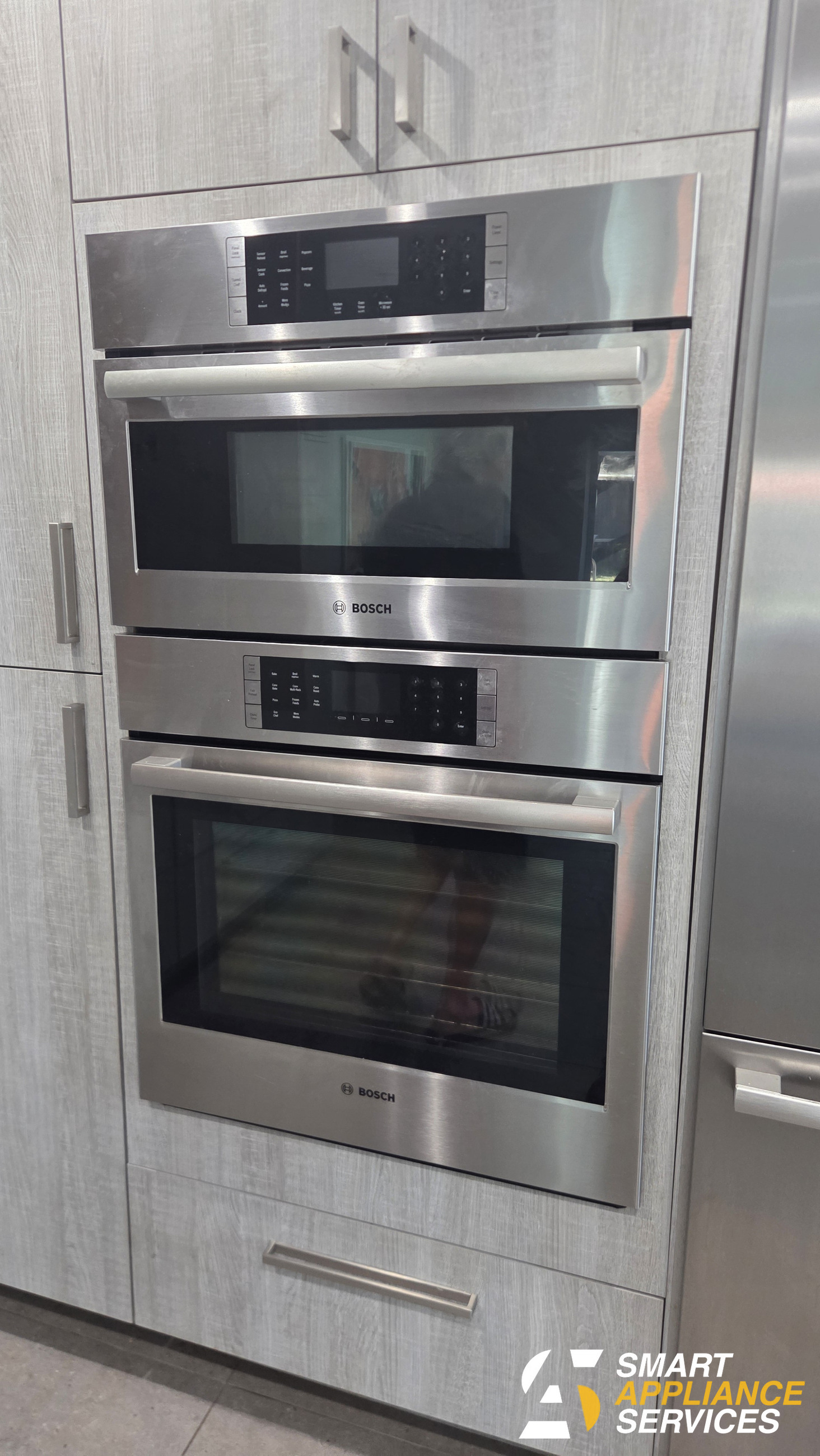
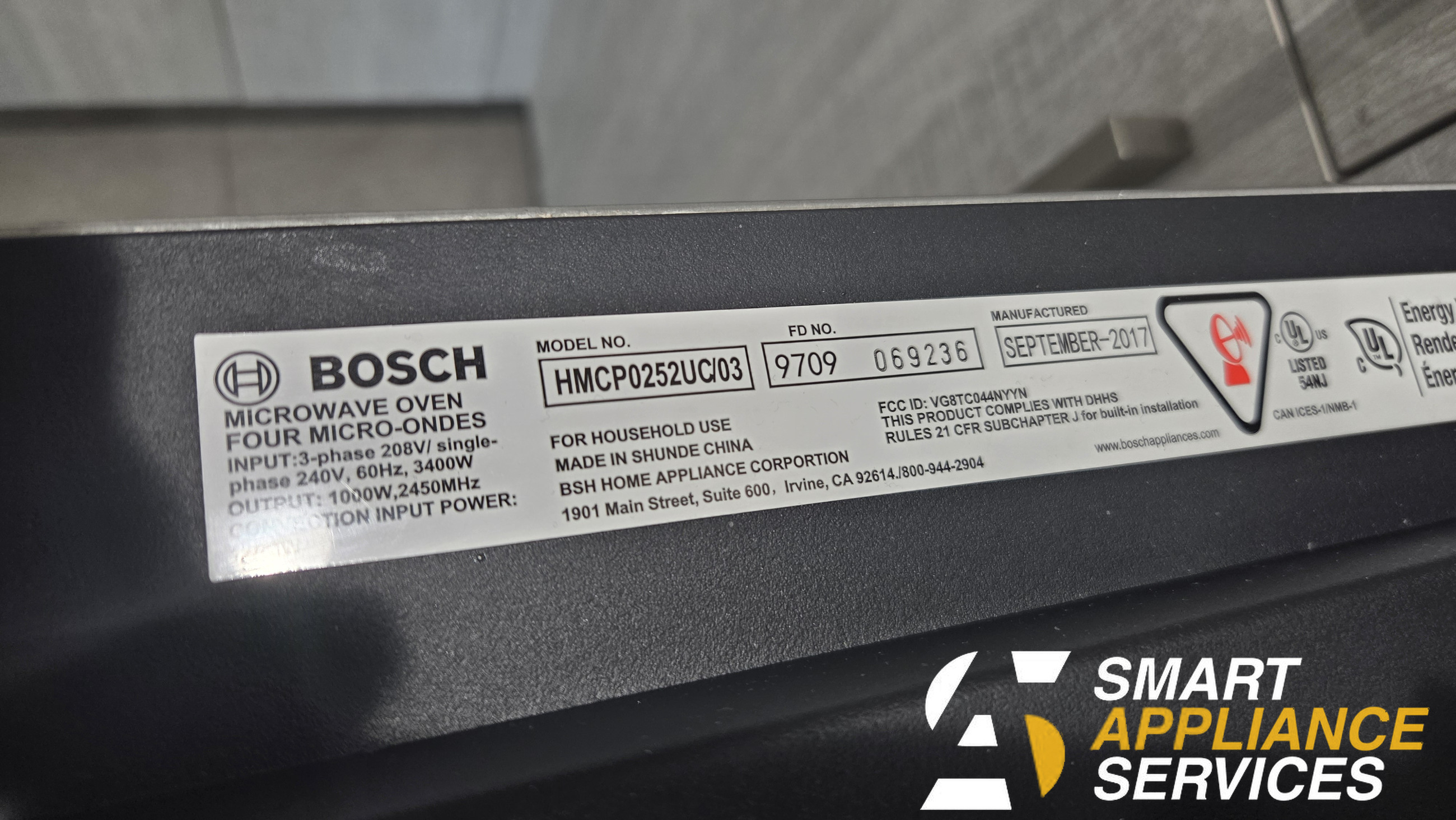
The customer reported a Bosch microwave not turning on at all. There was no display, no interior light, and no response from the control panel—the appliance appeared completely dead. Because there was no sign of power anywhere in the microwave, the technician started by checking its electrical supply and protective fuse.
Why did the microwave fuse keep blowing?
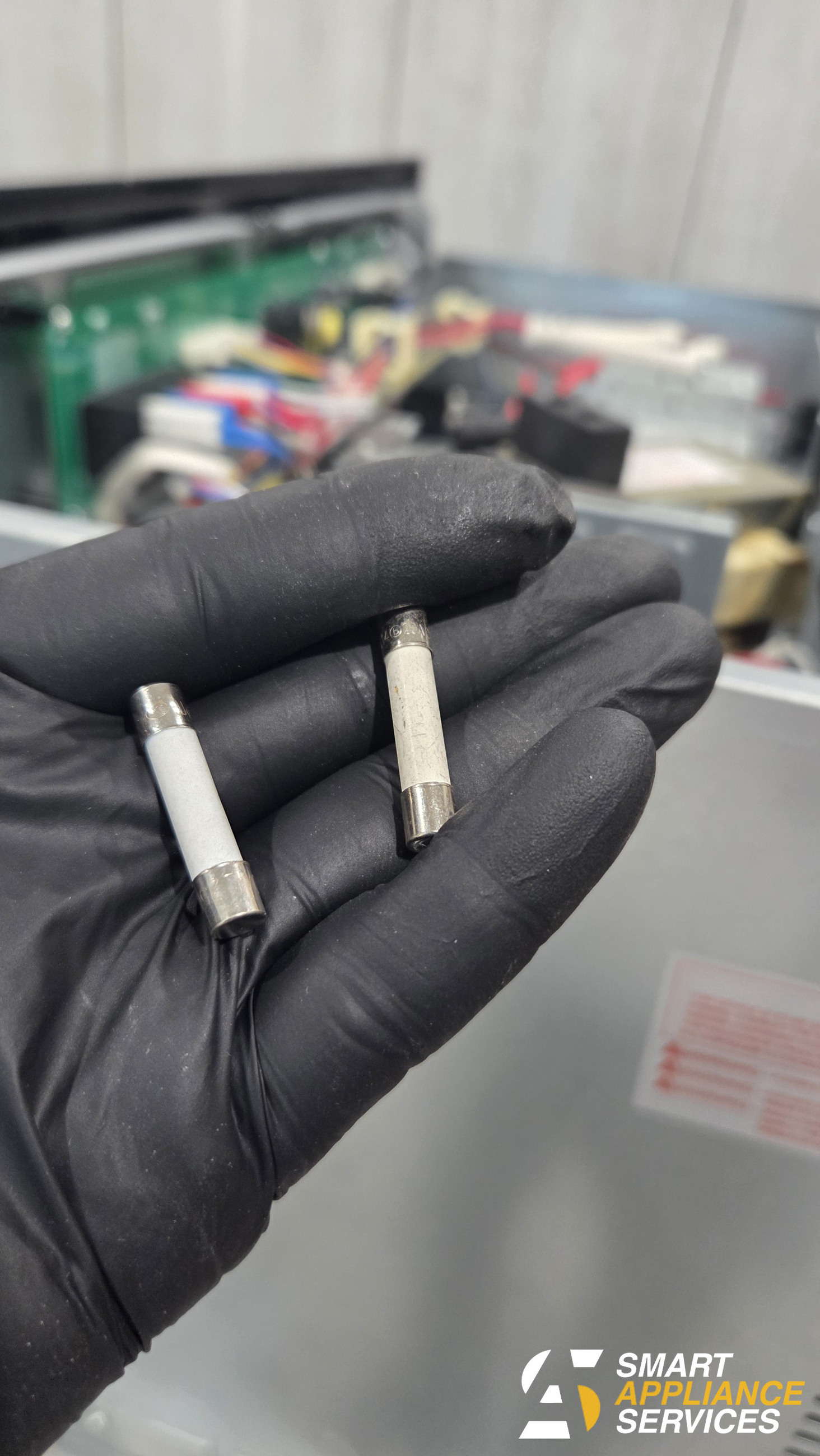
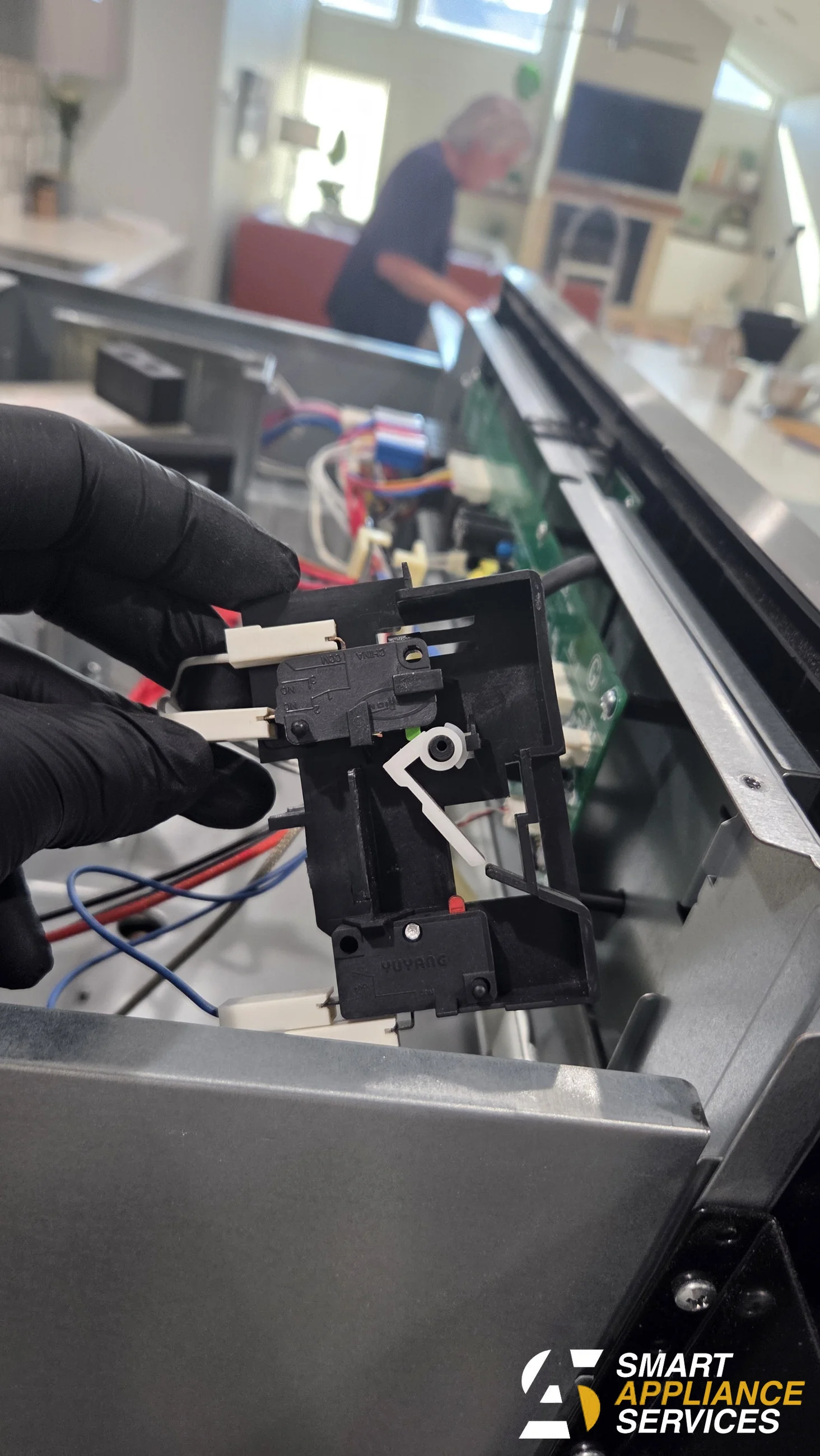
The fuse was blown, but that was only the symptom. A fuse interrupts power when a circuit develops a problem; simply fitting a new one does not repair whatever caused it to fail. During the diagnosis, the technician installed a replacement fuse, and that fuse blew too. This pointed to an electrical fault still present in the microwave. Two areas that can cause this kind of failure are the high-voltage circuit and the door-interlock switches. Rather than keep changing fuses, the technician examined the door-switch mechanism and found the fault there. Testing inside a microwave, including its high-voltage circuitry, is work for trained technicians only.
How the door-interlock monitor switch protects the microwave
Microwaves have multiple door switches for a reason: microwave energy must stop whenever the door is opened, even slightly. The regular interlock switches prevent the oven from operating unless the door is properly closed. The separate monitor switch serves as a backup safety device if those normal protections fail.
The monitor switch works in the opposite direction from the main interlocks. With the door fully closed, its contacts should be open, allowing the microwave’s normal operating circuit to function. When the door opens, the monitor contacts close, while the primary interlocks should open and interrupt operation. Opening the door normally does not blow the fuse, because the primary interlocks have already interrupted power. But if the monitor switch stays closed at the same time the operating circuit is energized, the conflicting switch positions can create a short circuit and blow the fuse. This is a deliberate fail-safe: the microwave loses power rather than continuing to operate with an unsafe door-interlock condition.
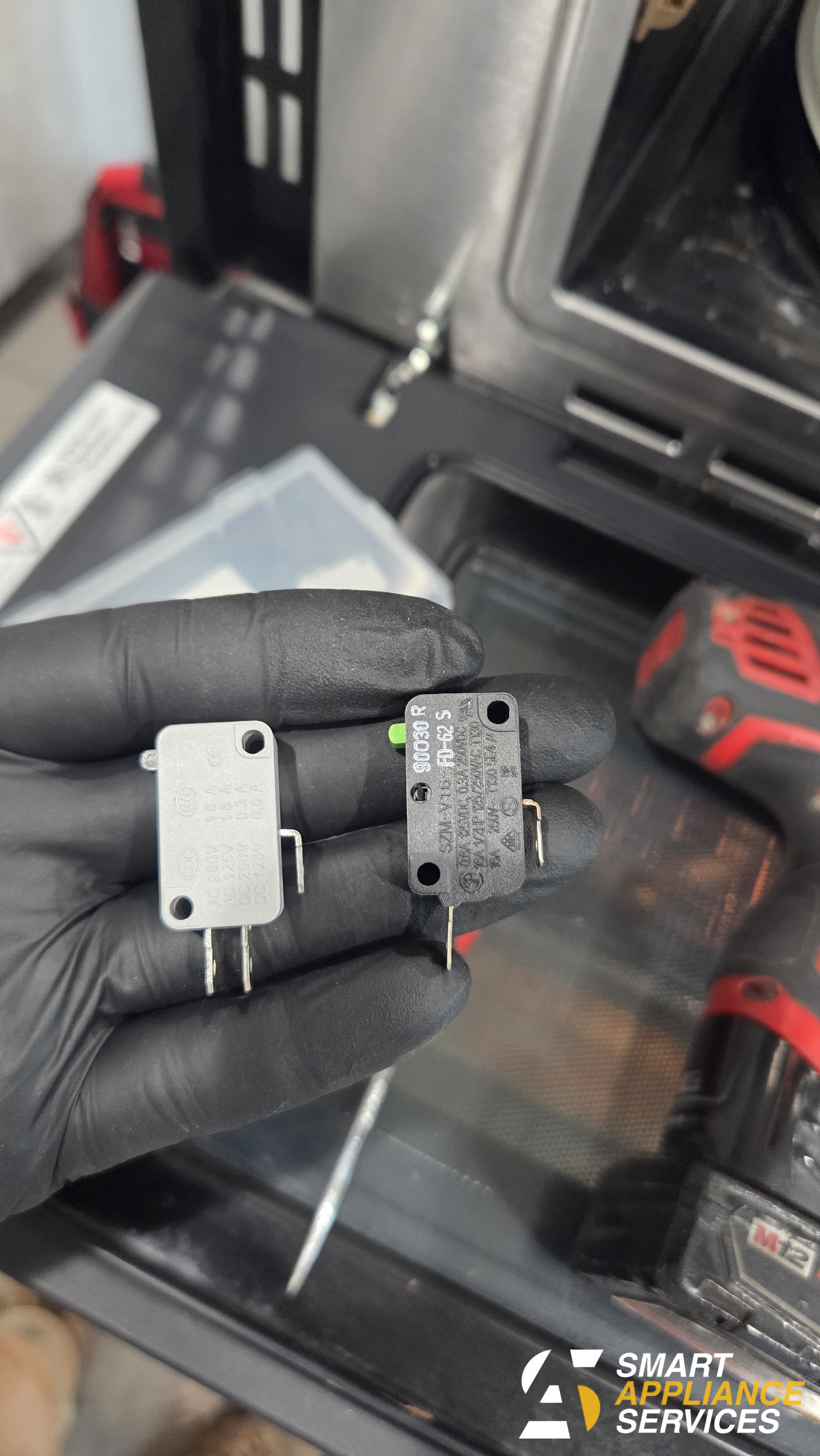
In this Bosch microwave, the middle monitor micro-switch was sticking and was not opening and closing correctly with the door mechanism. That left the safety circuit in the wrong state and caused the fuse to blow. This explained why the microwave had no display or light—and why a new fuse failed again.
Replacing the failed switch and fuse
The technician had a replacement micro-switch on the service van, a commonly needed part for microwave repairs. He replaced the sticking middle interlock monitor switch and installed another 25A fuse. Once the door-switch assembly was back together, he checked the microwave’s operation.
Display, light and heating restored
The display and interior light came back on, the controls responded, and the microwave heated food again. Most importantly, replacing the faulty door-monitor switch addressed the cause of the blown fuse rather than just restoring power temporarily. The microwave was working normally by the end of the visit.