


 May 15, 2026
 How to Clean Your Maytag Dishwasher Filter
If your Maytag dishwasher has been leaving dishes grimy, producing a stale odor, or draining slowly, there’s a good chance the filter needs attention. It’s one of the most overlooked maintenance tasks in any kitchen — and also one of the easiest to take care of once you know the steps. This guide covers everything from finding the filter to cleaning it correctly, so you can get your machine back to full performance without any guesswork.
How to Clean a Maytag Dishwasher Filter
Cleaning the filter usually takes ten minutes from start to finish.
What You’ll Need
- A soft-bristle brush (an old toothbrush works well)
- Dish soap or mild detergent
- Warm water
- A towel or paper towels
Step 1: Let the Dishwasher Cool Down
Don’t reach in right after a cycle — give the machine 15 to 20 minutes to cool. Make sure it isn’t running. You don’t need to unplug it, but it should be completely idle before you start.
Step 2: Pull Out the Lower Rack
Slide the bottom rack out fully and set it aside. You need clear, unobstructed access to the floor of the tub.
Step 3: Locate and Remove the Filter Assembly
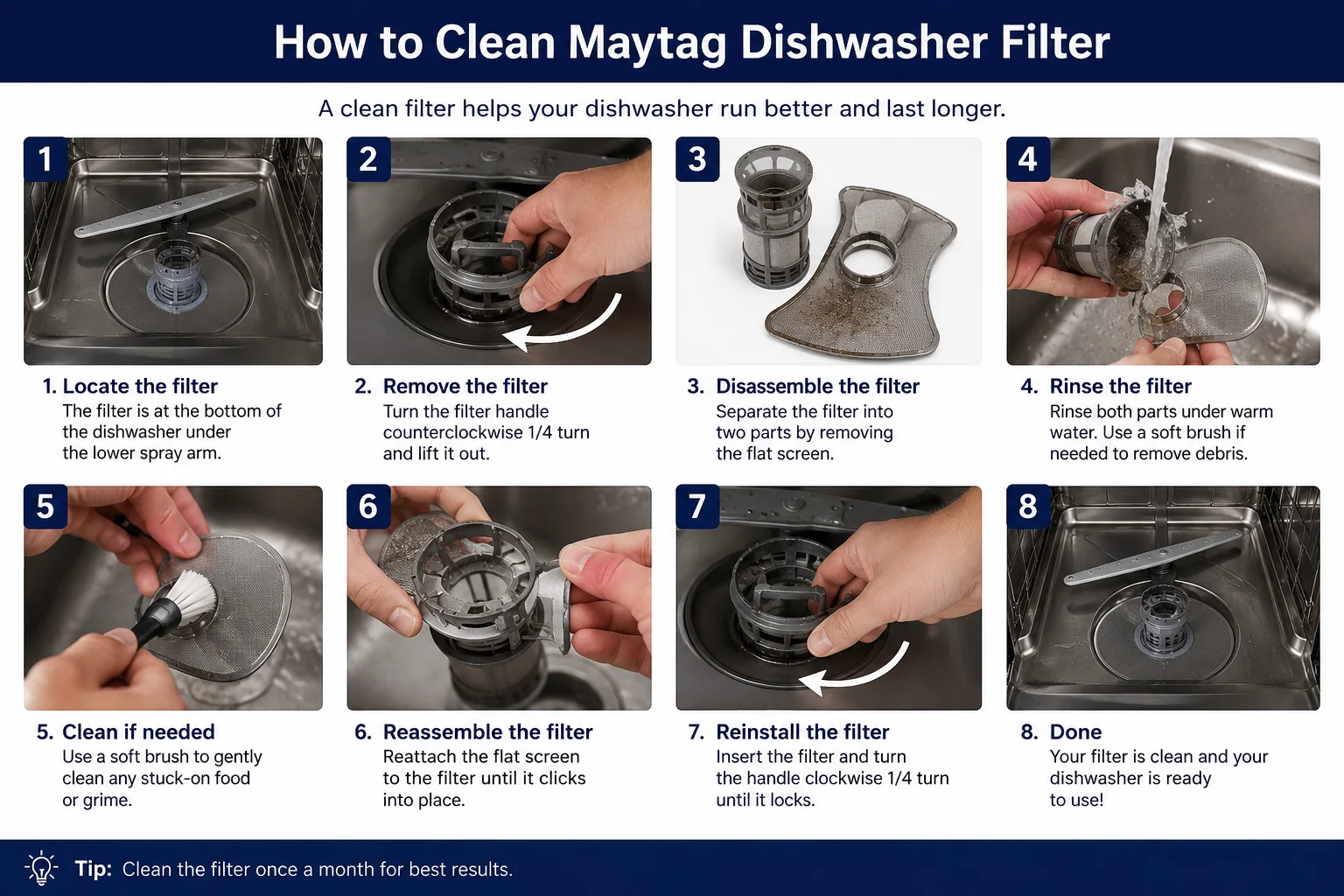
The Maytag dishwasher filter sits on the floor of the tub, near the center or slightly toward the front depending on your model. It’s a two-piece assembly: a cylindrical upper filter and a flat lower screen beneath it.
Grip the upper filter and turn it counterclockwise — most models release with about a quarter turn. Lift it straight out. Then lift the flat lower screen out from the recess below it. That’s all there is to it — no tools, no screws, usually under two minutes once you know where to look.
Step 4: Rinse Both Pieces Under Warm Water
Take both filter components to the sink and rinse them under warm running water to clear loose debris. Avoid using very hot water, which can warp the fine mesh screen.
Step 5: Scrub Gently
Apply a small amount of dish soap to your soft brush and scrub both sides of each piece, paying close attention to the mesh where grease and food particles tend to get embedded. Skip abrasive scrubbers or steel wool — they damage the mesh and reduce the filter’s ability to do its job.
Step 6: Inspect for Damage
While the filter is in your hands, check the mesh carefully for tears, warping, or cracks. A damaged filter should be replaced, not reinstalled. Replacement parts are available through the official Maytag parts page, just have your model number ready.
Step 7: Reinstall Correctly
Place the flat lower screen back into its recess first, making sure it sits evenly with no raised edges. Then insert the upper cylindrical filter and rotate it clockwise until it locks firmly in place. If it spins freely without stopping, it isn’t seated — a loose filter can get drawn into the pump, which creates a much bigger problem than a dirty one. Once it’s locked, slide the rack back in and you’re done.
If you’re not sure where to start or just not comfortable doing it yourself, our Maytag appliance repair service is always here to help.
Why This Matters
Most modern Maytag dishwashers use a manual filter system rather than the self-cleaning grinder found in older models. That means the filter collects everything – food particles, grease, and fine debris – and holds onto it until you clean it out. When it gets clogged, water can’t circulate properly, dishes come out with residue, and that sour smell that lingers even after a full cycle? That’s decomposing food trapped in the filter housing.
Regular cleaning is genuinely the most effective part of Maytag washer maintenance.
Long-Term Habits That Keep the Filter Cleaner, Longer
A few small changes to how you load and run your dishwasher can significantly reduce how quickly the filter gets clogged:
- Scrape plates, don’t rinse them. Modern dishwashers are built to handle food particles — that’s what the filter is for. Removing large scraps before loading is enough. Full pre-rinsing actually reduces wash performance by giving the detergent nothing to work against.
- Use quality detergent. Budget detergents leave more residue behind, which builds up on the filter and spray arms faster. A good pod or tablet with a rinse aid keeps things cleaner between maintenance sessions.
- Address hard water. Hard water accelerates mineral buildup on every component inside your dishwasher. Running a citric acid cleaning tablet once a month goes a long way toward keeping scale under control.
If you ever notice performance issues that cleaning doesn’t resolve, don’t wait too long to get it checked. For customers in the Tampa Bay area, our appliance repair in Saint Pete team can diagnose and fix most dishwasher problems in a single visit. And if you’re dealing with both kitchen and laundry appliance issues at the same time.
When It’s Time to Clean Your Dishwasher Filter
You don’t always need to wait for a scheduled cleaning day. Your dishwasher will usually give you hints when the filter is overdue.
Dishes come out with residue. A gritty film or visible food particles on plates after a full cycle is one of the clearest signs something is off. Most of the time, a clogged filter is the first thing to check.
There’s a lingering smell. A musty or sour odor coming from inside the tub — even after a hot wash – usually means food debris has been sitting in the filter long enough to start decomposing.
Water is draining slowly. If you notice standing water at the bottom of the tub after a cycle, or the machine seems to be taking longer to drain than usual, a blocked filter could be restricting the flow.
Any one of these is a good enough reason to pull the filter out and take a look. The fix is often quicker than you’d expect.
Additional Tips to Extend Your Washer Life
A clean filter is a great start, but a few extra habits make a real difference over time:
- Clean the filter monthly – set a recurring reminder so it doesn’t slip through the cracks
- Wipe the door gasket every 2–3 weeks with a damp cloth and a little white vinegar to prevent mold buildup
- Clear the spray arm holes every couple of months using a toothpick – blocked holes mean uneven water distribution and dirty dishes
- Run an empty cleaning cycle once a month with a dishwasher tablet or a cup of white vinegar on the top rack
- Use rinse aid consistently – it reduces water spots, helps dishes dry faster, and cuts down on residue reaching the filter
- Scrape plates before loading, but skip the full pre-rinse – modern dishwashers are designed to handle light food particles
- Don’t overload the racks – overcrowding blocks water from reaching all surfaces and puts extra strain on the spray arms
- Descale every 1–2 months if you have hard water – a citric acid tablet dissolves mineral buildup before it becomes a problem.
When a Clean Filter Still Doesn’t Fix the Problem
If you’ve cleaned the filter thoroughly and your dishwasher is still underperforming – dishes aren’t coming out clean, water is pooling at the bottom, or you’re hearing unusual sounds – the issue is likely somewhere else in the machine. A blocked drain line, a weakening pump, or a spray arm motor problem won’t be solved by filter maintenance alone.
That’s when it makes sense to bring in a professional rather than continuing to troubleshoot blind. Our appliance repair service handles exactly these kinds of deeper diagnostic issues, from drain faults to internal component failures across all major Maytag dishwasher models.
Conclusion
Cleaning your Maytag dishwasher filter is one of the simplest maintenance tasks you can do, but it makes a huge difference in performance. A clean filter improves water circulation, prevents odors, helps the dishwasher drain properly, and keeps food particles from getting redeposited onto your dishes. With just a few minutes of routine upkeep, you can avoid many of the most common dishwasher problems before they turn into expensive repairs.
If you’ve already cleaned the filter and the dishwasher is still leaving residue, draining slowly, or making unusual noises, the issue may be deeper in the drain system or internal components. In that case, professional diagnosis is the safest next step to restore full function and prevent further damage.
FAQs
Where is the filter on a Maytag dishwasher?
The filter is located on the floor of the dishwasher tub, typically near the base of the lower spray arm. Remove the bottom rack to access it. It consists of a cylindrical upper filter that twists out and a flat lower filter screen beneath it.
How do I remove the Maytag dishwasher filter without tools?
No tools are needed. Twist the upper cylindrical filter counterclockwise about a quarter turn and lift it straight out. The lower flat screen lifts out beneath it. The whole process takes about 60 seconds once you know where to look.
How often should I clean the Maytag dishwasher filter?
Maytag recommends at least once a month for regular use. If you run heavy loads daily without pre-rinsing, every two to three weeks is more appropriate. Light users can stretch to every six to eight weeks.
What happens if I never clean the dishwasher filter?
A neglected filter becomes clogged with food debris and grease, which reduces water circulation, leaves residue on dishes, causes unpleasant odors, and puts extra strain on the drain pump. Over time, a severely blocked filter can contribute to pump failure — a repair far more costly than regular filter maintenance.