


 July 23, 2026
 Why Ice Maker Leaking Water and How to Fix It
A puddle in the freezer or a wet floor under the fridge is never fun to discover. If your ice maker is leaking water, take a breath, this is one of the more common refrigerator issues we see, and in most cases it’s fixable without replacing the whole unit. Our ice machine repair service team also provides appliance repair in Saint Petersburg for exactly this kind of issue, so if you’d rather not deal with it yourself, help is close by.
This article is organized by where the water is showing up, since that’s usually the fastest way to narrow down the cause.
Where Is the Water Coming From?
Ice maker leaks tend to show up in one of four places. Find yours below.
Leaking Water Into the Ice Bin
If you’re noticing your ice maker leaking water into the bin, water is likely getting into the bin before it freezes properly, or ice is melting inside the bin itself.
Common causes:
- The freezer door isn’t sealing tightly, letting warm air in and melting ice in the bin
- The ice maker is overfilling due to a faulty water inlet valve
- The bin itself is positioned slightly off-level
What to check: Inspect the door gasket for gaps or tears, and make sure the bin is seated correctly in its slot.
Leaking Water Into the Freezer
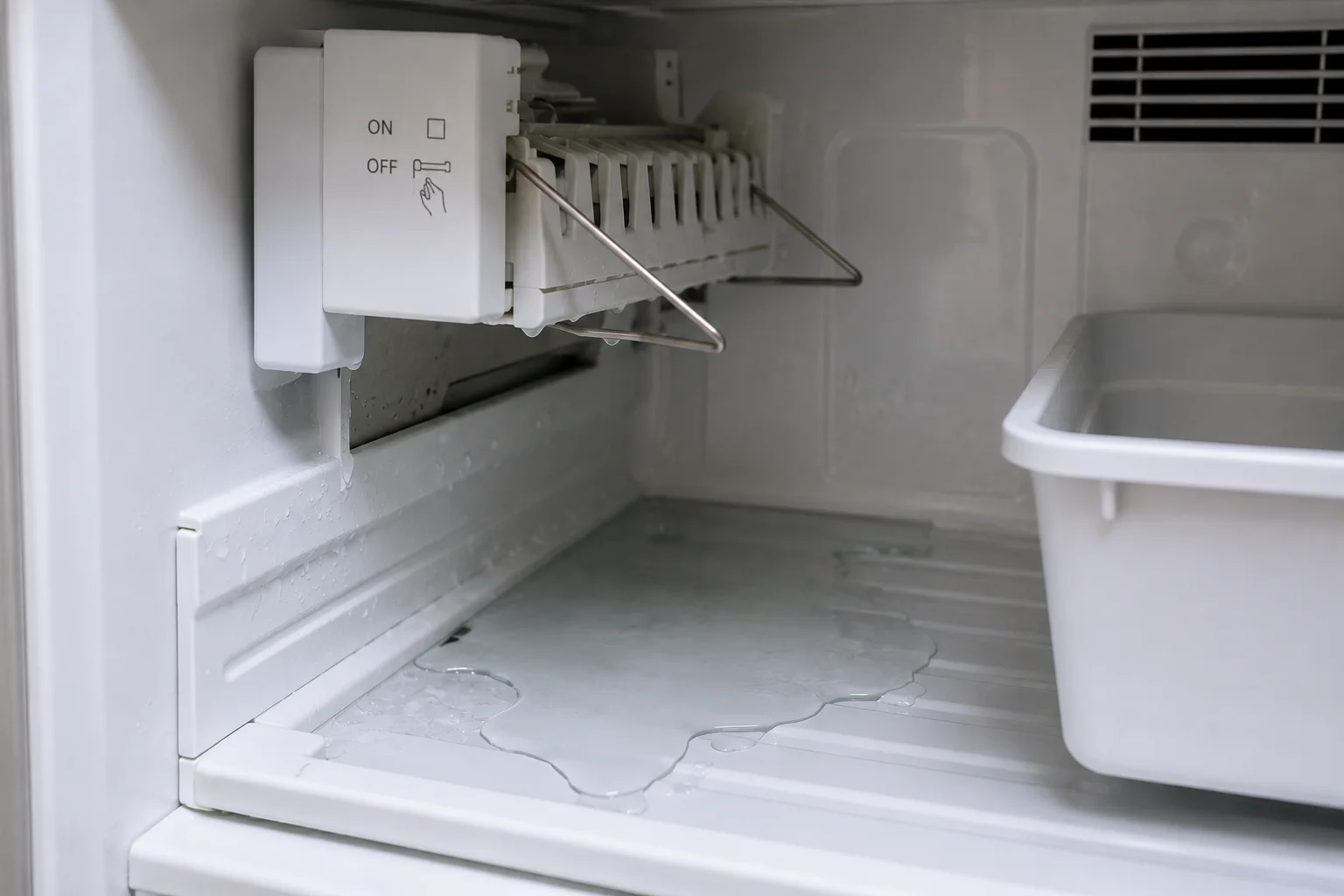
When you see an ice maker leaking water into the freezer floor (rather than the bin), it usually points to the fill tube or water line.
Common causes:
- A cracked or disconnected fill tube inside the freezer wall
- The water line fitting has loosened over time
- Ice buildup around the fill tube is causing overflow during the fill cycle
What to check: Look behind the ice maker unit for visible ice buildup or a dislodged tube. If you see frost accumulating in one specific spot, that’s usually your leak source, a freezer repair service can pinpoint it quickly if it’s not obvious.
Ice Maker Dripping From the Dispenser
If it’s dripping water specifically from the front dispenser (not the internal bin), this is typically a different issue altogether.
Common causes:
- A worn dispenser door seal that isn’t closing fully
- Condensation buildup from temperature swings near the dispenser chute
- A cracked dispenser housing
What to check: Run your hand along the dispenser door seal for gaps, and check whether the dripping happens right after dispensing (normal residual drip) or continuously (not normal).
Leaking From Underneath the Refrigerator
This one is often unrelated to the ice maker directly, but it’s frequently mistaken for one. A fridge ice maker leaking underneath the unit is more often:
- A clogged or misaligned defrost drain
- A cracked drain pan
- A water line leak at the connection behind the fridge
What to check: Pull the fridge out (carefully, with it unplugged) and inspect the drain pan and the water line connection point. If the leak keeps coming back after clearing it yourself, a refrigerator repair service can check the drain pan and line connection more thoroughly.
Quick Self-Check Before You Call for Help
Try these three things first:
- Unplug the fridge and check the door seal. A worn gasket is the single most common cause of leaks into the bin.
- Look for visible ice buildup near the fill tube. This points to a fill tube or water line issue.
- Check the level of the fridge itself. An unlevel refrigerator can cause water to pool in places it shouldn’t. Most fridges have adjustable feet at the front base.
If none of these resolve it, or if you’re seeing consistent leaking rather than an occasional drip, the issue is likely mechanical (a cracked part or a valve problem) rather than something you can adjust by hand. And if you’ve cleared up the leak but notice the unit still isn’t producing ice properly afterward, that’s usually a separate issue, see our guide on refrigerator ice maker not making ice for that.
Why Leaks Are Worth Fixing Quickly
A small leak rarely stays small. Water finding its way into the wrong parts of your fridge can lead to:
- Ice buildup that blocks airflow and affects cooling
- Water damage to flooring or cabinetry underneath
- Electrical issues if water reaches internal components
Get It Properly Fixed
Diagnosing exactly which part is causing your leak — fill tube, valve, gasket, or drain — takes some hands-on inspection, and getting it wrong means the leak just comes back. Our technicians handle refrigerator ice maker leaking repairs regularly and can identify the source quickly, replace the right part the first time, and make sure it doesn’t reappear in a few weeks. We serve Tampa and St. Petersburg with flexible scheduling for exactly this kind of repair.
Frequently Asked Questions
Is it safe to keep using the fridge while the ice maker is leaking? Generally yes for a short while, but it’s worth unplugging the ice maker itself (many models have a separate switch) until you identify the source, since continued leaking can lead to more ice buildup and potential water damage.
FAQs
Is it safe to keep using the fridge while the ice maker is leaking?
Generally yes for a short while, but it’s worth unplugging the ice maker itself (many models have a separate switch) until you identify the source, since continued leaking can lead to more ice buildup and potential water damage.
Can hard water contribute to ice maker leaks?
Yes. Mineral buildup from hard water can cause the water inlet valve to stick partially open or not seal fully, which leads to slow, ongoing leaks over time even without a cracked part.
How can I tell if it’s an actual leak versus normal condensation?
Condensation tends to appear as light moisture or fog on surfaces, especially in humid weather, and doesn’t pool. An actual leak produces visible dripping, pooling, or ice buildup in a consistent spot.
Does a leaking ice maker mean a part definitely needs replacing?
Not always. Some leaks are caused by something fixable without parts, like an unlevel fridge or a bin that’s not seated correctly. Others do require replacing a cracked tube or valve, which is where a professional diagnosis helps.
Can a leaking ice maker affect the rest of the refrigerator’s cooling?
Indirectly, yes. Water that freezes in the wrong spot can block air vents inside the freezer, which affects airflow and can lead to uneven cooling throughout the fridge.