


 August 13, 2026
 Samsung Dishwasher LC/LE: Leak Safety and Next Steps
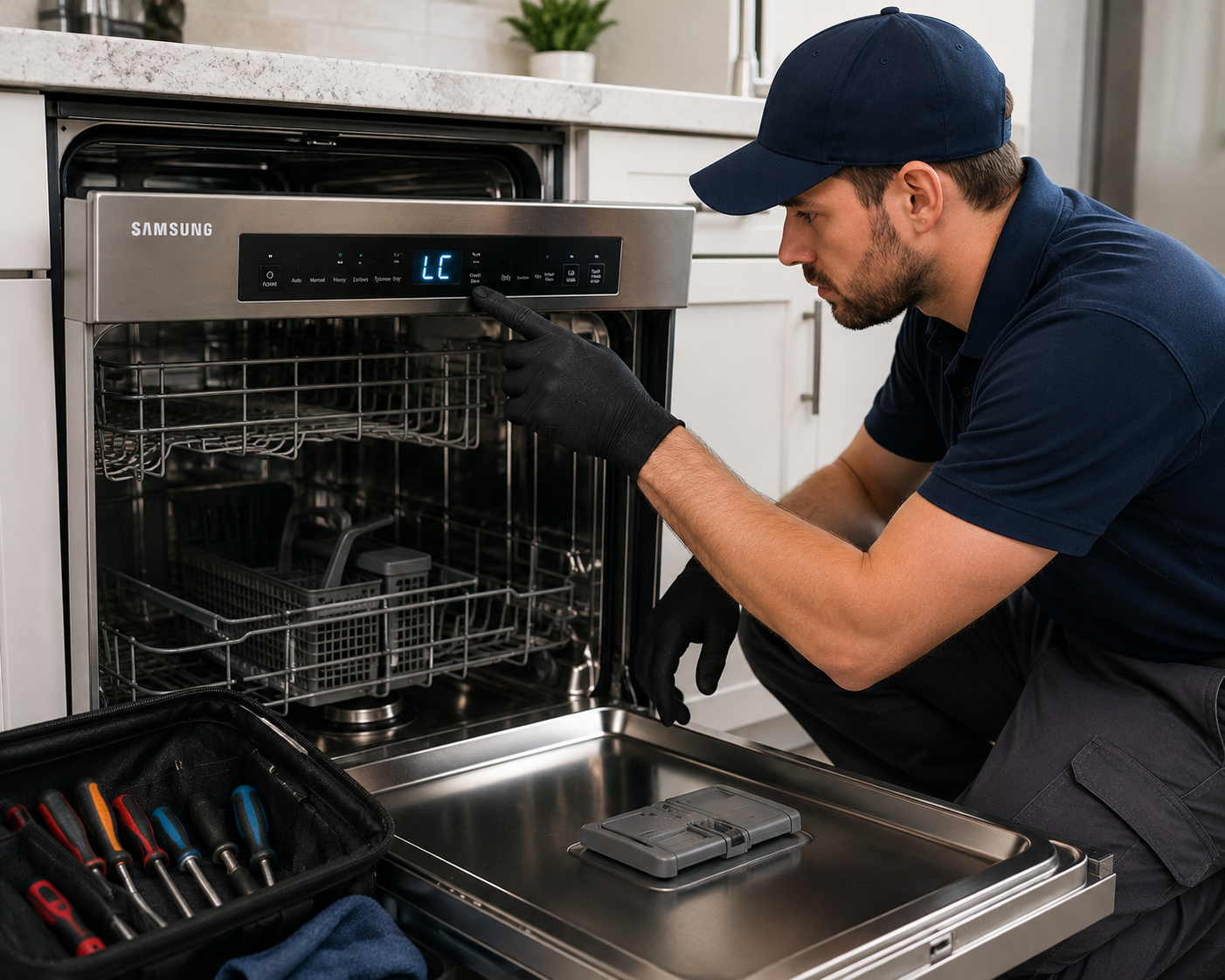
If your Samsung dishwasher display suddenly lights up with LC, it’s telling you the built-in leak sensor has detected water where it shouldn’t be — or thinks it has. For most homeowners, that’s an alarming sight in the middle of a wash cycle. The good news is that the LC code doesn’t always mean a serious leak, and in many cases you can figure out what’s going on before you even reach for the phone. If the issue turns out to be more than a quick fix, appliance repair in Saint Pete is available to get your dishwasher back in working order fast.
Below, we’ll walk through what the LC error actually means, the most common causes, and step-by-step ways to reset it safely.
What Is the LC Error Code on a Samsung Dishwasher
Samsung dishwashers use a leak detection sensor, usually located in the base pan, to protect your kitchen from water damage. When that sensor senses moisture, or when the water level inside the unit rises above what the cycle expects, the control board triggers the LC error code and pauses the wash cycle. This is a safety feature first and a malfunction indicator second — the dishwasher is designed to stop itself rather than risk flooding your floor.
The LC error can point to an actual leak from a hose, gasket, or pump seal, but it can also be triggered by something far less serious, like condensation pooling in the base pan or a sensor that’s simply misreading normal moisture.
Common Causes of the LC Code on Your Samsung Dishwasher
| Possible Cause | What’s Happening | How Common |
| Loose or cracked water inlet hose | Water drips into the base pan during fill | Very common |
| Worn door gasket | Water escapes around the door seal during wash | Common |
| Faulty float switch or leak sensor | Sensor misfires even when no water is present | Common |
| Clogged or slow drain | Water backs up and trips the sensor | Moderate |
| Condensation buildup | Normal moisture is mistaken for a leak | Moderate |
| Cracked tub or pump housing | Water leaks from the pump assembly itself | Less common |
Most of these causes start small. A hose clamp that’s slightly loose or a gasket that’s just beginning to wear won’t flood your kitchen right away, but it will keep triggering the LC code until it’s addressed.
Samsung Dishwasher LC Code But No Leak, What It Means
It’s actually quite common to see the LC code with no visible water anywhere near the unit. When this happens, the culprit is usually the leak sensor itself rather than an actual leak. Sensors can become oversensitive due to age, a small amount of condensation, or debris sitting in the base pan and touching the float switch. A dishwasher installed slightly off-level can also cause water to pool unevenly in the base, which is enough to set off the sensor even though nothing is actually broken.
Before assuming the worst, check that the dishwasher is level, wipe out any residual moisture from the base pan, and make sure nothing (like a dropped utensil or debris) is resting against the float switch.
How to Reset the LC Code on a Samsung Dishwasher
If you’ve confirmed there’s no active leak, resetting the dishwasher is often enough to clear the code and get back to normal cycles.
| Step | Action |
| 1 | Turn off the dishwasher and unplug it, or switch off the breaker |
| 2 | Open the door and check the base pan for standing water; dry it thoroughly with a towel |
| 3 | Inspect the float switch (usually a small dome near the front) and make sure it moves freely |
| 4 | Leave the unit unplugged for 5–10 minutes to let the control board fully reset |
| 5 | Plug it back in or restore power at the breaker |
| 6 | Run a short cycle to confirm the LC code has cleared |
If you’re looking for general troubleshooting help for other kitchen or laundry equipment, our team offers appliance repair services across the Tampa Bay area, not just for dishwashers.
LC Code Flashing or Won’t Turn Off — Next Steps
Sometimes the LC code flashes repeatedly, or the dishwasher won’t respond to a reset at all. When the code keeps returning even after you’ve dried the base pan and confirmed there’s no leak, it usually means the float switch or leak sensor itself has failed and needs to be tested or replaced. A dishwasher that won’t turn off, or that keeps beeping and flashing LC no matter what you try, should not be run again until it’s been checked — continuing to use it risks a real leak developing from a component that’s already under strain.
At this point, it’s worth having a technician run a diagnostic rather than repeatedly resetting the unit. Our dishwasher repair servic includes a full check of the leak sensor, float switch, hoses, and pump seals to pinpoint exactly what’s triggering the code.
When to Call a Professional for Samsung Dishwasher Repair
A quick reset solves the problem for plenty of homeowners, but there are a few signs that mean it’s time to bring in a professional rather than keep troubleshooting on your own:
- Water is visibly pooling under or around the dishwasher
- The LC code returns immediately after every reset
- You hear unusual pump or motor noises during the cycle
- The base pan is wet even when the dishwasher hasn’t run recently
Samsung dishwashers have their own quirks when it comes to sensor calibration and part replacement, so working with a technician familiar with the brand makes a real difference. Our Samsung dishwasher repair service is built around exactly this kind of diagnosis, from leak sensors to door gaskets to pump assemblies.
FAQs
Can I keep using my dishwasher if it shows the LC code?
It’s best to pause use until you’ve checked for water in the base pan. Running additional cycles while a real leak is present can lead to water damage to your cabinets or flooring.
Does the LC code mean I need a new dishwasher?
Rarely. Most LC codes trace back to a hose, gasket, or sensor issue that can be repaired without replacing the entire unit.
Why does my Samsung dishwasher show LC code right when I open the door?
This often points to a sensor that’s reacting to residual moisture in the base pan rather than an active leak during the cycle itself.
How long does it take to fix an LC code issue?
A simple reset takes minutes. A part replacement, like a float switch or hose, is typically a same-day fix once a technician has diagnosed the cause.
Is the LC code covered under warranty?
Coverage depends on your dishwasher’s age and warranty terms. A technician can help determine whether the specific part causing the issue is still covered.