


 July 10, 2026
 Hurricane Season Prep: How to Protect Your Refrigerator and Freezer
Hurricane season brings more than just wind and rain to worry about. Power outages, surges, and flooding can all take a toll on your kitchen’s hardest-working appliance — your refrigerator. A few smart steps taken before the storm can save you from spoiled food, costly repairs, or a refrigerator that simply won’t turn back on once the power returns.
This guide walks you through everything you need to know about hurricane refrigerator preparation, from surge protection to food safety tricks, so you’re not caught off guard when the forecast turns severe. And if your fridge does take a hit from the storm, our refrigerator repair service and appliance repair in Saint Pete team is ready to help you get back up and running fast.
How to Prepare Your Refrigerator Before a Hurricane
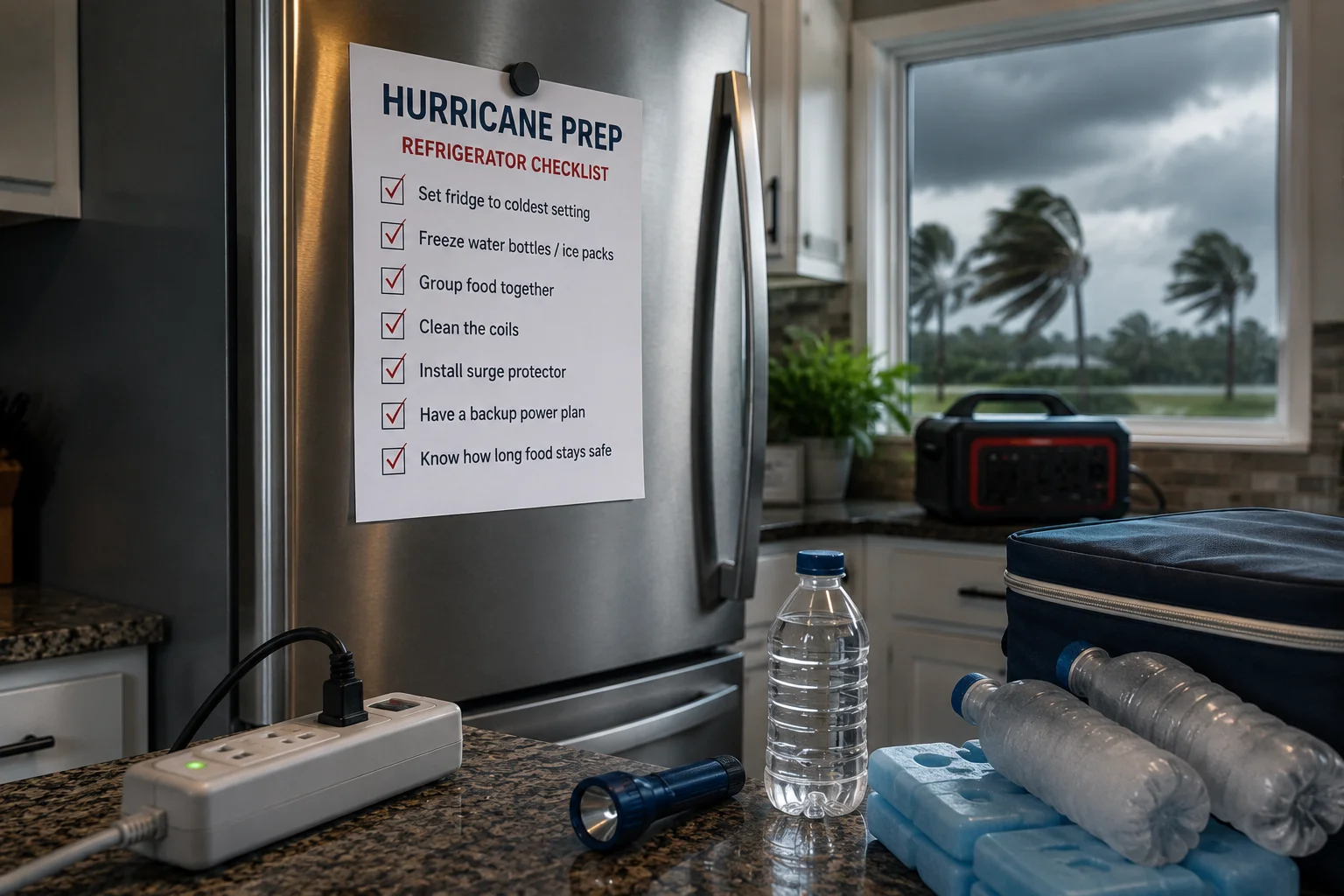
Good hurricane home preparation starts days before the storm actually hits, not the night before. Here’s a simple checklist to work through:
- Set your fridge and freezer to the coldest safe setting. A colder starting temperature buys you extra hours if the power goes out.
- Freeze water bottles or ice packs and tuck them into empty spaces in the freezer — they’ll help keep everything cold longer.
- Group food together. A packed freezer stays cold much longer than a half-empty one, since the frozen items act like ice packs for each other.
- Know your appliance’s condition beforehand. If your fridge has been running warm or cycling oddly, don’t wait for hurricane season to find out why — check out this guide on why your refrigerator is running but not cooling so small issues don’t turn into total failures during an outage.
- Clean the coils. Dusty condenser coils make your fridge work harder and less efficiently, which matters even more when you’re trying to squeeze out every extra hour of cold air. Here’s a quick walkthrough on cleaning your refrigerator coils.
- Unplug non-essential appliances ahead of the storm to reduce strain on your home’s electrical system.
- Have a plan for backup power, even if it’s just a small generator or cooler with ice.
- Install surge protection (more on this below — it’s one of the most overlooked steps).
What Is the Best Surge Protector for a Refrigerator?
Refrigerators are especially vulnerable during hurricanes because power grids often experience surges and brownouts as they go down — and again when service is restored. A cheap power strip surge protector won’t cut it for an appliance like this.
The best surge protector for a refrigerator is typically a dedicated appliance surge protector rated for at least 1800–2600 joules, designed specifically for high-draw appliances like refrigerators and freezers. Unlike standard power-strip protectors, these units are built to handle the compressor’s startup current without tripping unnecessarily.
Here’s a quick comparison to help you choose:
| Surge Protector Type | Best For | Joule Rating | Notes |
| Dedicated appliance surge protector | Refrigerators & freezers | 1800–2600+ | Purpose-built, handles compressor surges well |
| Whole-home surge protector | Entire electrical panel | Varies (10,000+) | Best overall protection, installed by an electrician |
| Standard power strip | Electronics, small devices | Under 1000 | Not recommended for refrigerators |
| Uninterruptible Power Supply (UPS) | Short outages | Varies | Keeps fridge running briefly, not built for long outages |
If you want the most complete protection, pairing a whole-home surge protector with a dedicated refrigerator surge protector gives you two layers of defense — one at the panel, one right at the outlet.
Can a Refrigerator Be Plugged Into a Surge Protector?
Yes — a refrigerator can and should be plugged into a surge protector, but it needs to be the right kind. Refrigerators draw a large burst of power when the compressor kicks on, so the surge protector must be rated to handle that load without tripping or degrading over time. Look for one specifically labeled safe for refrigerators or large appliances, plug it directly into a wall outlet (never into an extension cord or another power strip), and avoid daisy-chaining it with other devices.
How to Protect a Refrigerator From a Power Surge?
Beyond a dedicated surge protector, a few extra habits go a long way in protecting your refrigerator during storm season:
- Plug the fridge directly into a wall outlet with a surge protector rated for major appliances.
- Consider a whole-home surge protector installed at your electrical panel for the strongest overall protection.
- Unplug the refrigerator entirely if you’re evacuating or expect an extended outage with unstable power restoration.
- Avoid running the refrigerator on a generator that isn’t properly rated or grounded — this is a common cause of post-storm appliance damage.
- After the power comes back on, wait a few minutes before plugging the fridge back in to let the initial surge from grid restoration pass.
How Long Will a Refrigerator Stay Cold Without Power?
This is one of the most important things to know before a storm hits, since it determines how you plan your food safety strategy.
| Appliance | Stays Cold (Door Closed) | Safe Food Threshold |
| Refrigerator | About 4 hours | Above 40°F after 4 hours = discard perishables |
| Full freezer | About 48 hours | Stays safe if kept closed and fully packed |
| Half-full freezer | About 24 hours | Less insulation means faster warming |
A few tips to stretch that window even further:
- Keep the doors closed as much as possible — every time you open the fridge, you lose valuable cold air.
- Group frozen items together to help them retain cold longer as a block.
- Use a thermometer to check the internal temperature if the outage lasts more than a few hours.
- When in doubt, throw it out — perishable food held above 40°F for more than two hours should not be eaten.
Can the Quarter-in-the-Freezer Test Show Whether Food Is Safe?
Do not use the position of a coin in a frozen cup of water to decide whether food is safe. A moved or sunken coin can only suggest that thawing may have occurred; it cannot tell you how warm the food became or how long it stayed warm. Use an appliance thermometer when possible. FDA and USDA guidance says frozen food that still contains ice crystals or is 40°F (4°C) or below can generally be safely refrozen or cooked. When food safety is uncertain, discard the food rather than tasting it to decide.
During a power outage, keep refrigerator and freezer doors closed. Perishable food in a refrigerator should be discarded if it has been above 40°F (4°C) for more than 2 hours. Frozen food that still contains ice crystals or is at 40°F (4°C) or below can be safely refrozen or cooked. When a thermometer reading or the food’s temperature history is unknown, do not rely on appearance, smell, or the quarter test; follow current food-safety guidance.
Should I Turn Off AC During a Hurricane?
Generally, yes — most experts recommend turning off your air conditioning once a hurricane is actively hitting your area, especially if winds are strong enough to cause power fluctuations or outages. Here’s why:
- Protects the compressor. AC units, like refrigerators, are vulnerable to power surges. Turning the unit off preemptively reduces the risk of damage when the power flickers or is restored.
- Reduces strain during outages. If you’re running on a generator, your AC can draw more power than the generator can safely handle alongside other essentials like your refrigerator.
- Storm damage risk. High winds can damage outdoor AC condenser units directly, and running the system during the worst of the storm doesn’t help once flying debris is involved.
Turn your AC back on only after the storm passes and power has fully stabilized — and ideally after your surge protector has done its job protecting the unit.
Refrigerator Guard: Extra Steps for Long-Term Protection
Think of a “refrigerator guard” strategy as anything that shields your fridge from the three biggest hurricane threats: power surges, extended outages, and water intrusion.
- Elevate if flooding is a risk. In flood-prone areas, consider appliance risers to lift your refrigerator off the floor.
- Seal and inspect door gaskets ahead of storm season — a weak seal lets cold air escape and makes your fridge work harder even in normal conditions.
- Watch for leaks after the storm. Power fluctuations and temperature swings can sometimes trigger drainage issues. If you notice pooling water afterward, this guide on why your refrigerator is leaking water can help you figure out the cause.
- Test your fridge after the storm. If it’s running but the inside isn’t getting cold, don’t assume the worst right away — start with this guide on how to fix a refrigerator that’s not getting cold before calling for service.
After the Storm: When to Call a Professional
Even with the best hurricane refrigerator preparation, some issues only show up after the power comes back on — strange noises, a compressor that won’t start, or a fridge that runs constantly but never quite gets cold. These are often signs of surge damage that a quick reset won’t fix.
If your refrigerator isn’t cooling properly after a storm, don’t wait for a full breakdown. A trained technician can check the compressor, thermostat, and electrical components to catch problems early — before you lose another freezer full of food.
Preparing now means fewer headaches later. A dedicated surge protector and a packed freezer can help during an outage. Do not use a coin’s position to decide whether food is safe.
FAQs
Should I unplug my refrigerator before evacuating for a hurricane?
Yes, if you’re leaving for an extended period, unplug the refrigerator entirely. This protects it from surges while you’re away and unable to monitor it, especially if power restoration causes electrical spikes.
Is it safe to run a refrigerator on a generator during a hurricane?
Only if the generator is properly rated and grounded for the refrigerator’s power draw. An underpowered or ungrounded generator can cause voltage fluctuations that damage the compressor.
Can I use dry ice to keep my freezer cold during a power outage?
Yes. About 25 pounds of dry ice can help keep a fully stocked 18-cubic-foot freezer cold for two to three days. Handle it with gloves and keep the area ventilated, since dry ice releases carbon dioxide gas.
Should I keep my refrigerator door open or closed during a power outage?
Keep it closed as much as possible. Every time the door opens, cold air escapes and the interior warms up faster, shortening the safe window for your food.
How soon after a hurricane can I safely plug my refrigerator back in?
Wait a few minutes after power is restored before plugging it back in. Utility companies often experience surges as they bring the grid back online, and a short delay lets that initial instability pass.
Can flooding damage a refrigerator even if the water never touches it?
Yes. Humidity and moisture in the air after flooding can affect electrical components and promote mold growth around door seals, even if the unit itself stayed dry.