


 July 16, 2026
 Refrigerator Ice Maker Not Making Ice: Complete Troubleshooting Guide
If your refrigerator’s ice maker stopped making ice, you’re probably standing in front of an empty ice bin wondering if you need to call in help or if it’s something you can fix yourself. The good news: most of the time, there’s a simple explanation. This guide walks you through the most common reasons a refrigerator ice maker is not working, in the order you should check them, so you can figure out exactly what’s going on and decide what to do next.
If you’d rather skip the troubleshooting and just get it fixed, our ice machine repair service team also handles appliance repair in Saint Petersburg and the surrounding Tampa Bay area, same-day visits are usually available.
Start Here: Quick Checks Before You Do Anything Else
Before diving into repairs, rule out the easy stuff first:
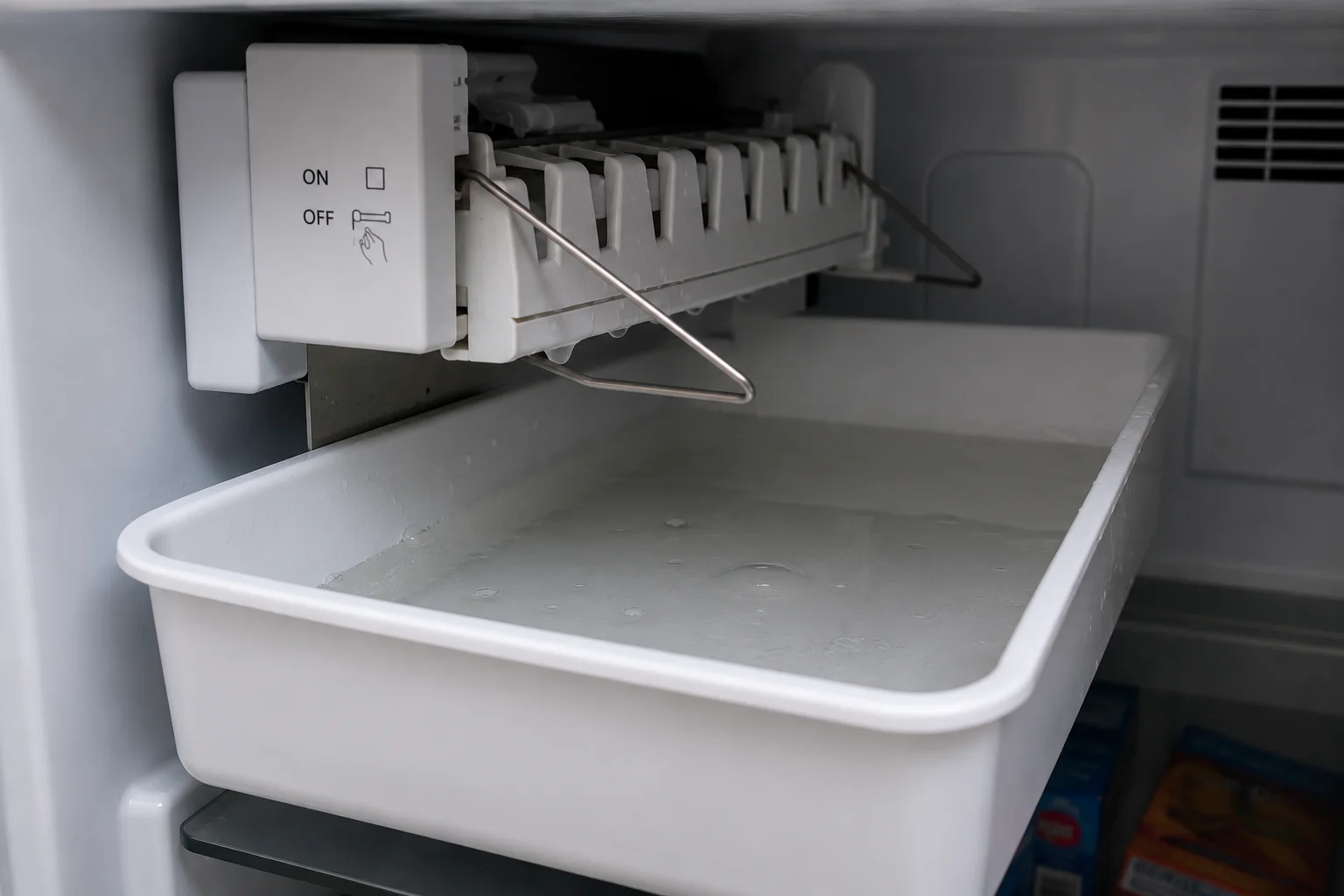
- Is the ice maker turned on? Many models have an on/off switch or arm inside the freezer. If it’s been accidentally bumped to the “off” position, that alone explains why your ice maker stopped making ice.
- Is the freezer cold enough? Ice makers need the freezer to be at 0°F (-18°C) or colder. If your freezer is running warm, the ice maker won’t cycle properly, this could mean your refrigerator is running but not cooling properly, which is a bigger issue than just the ice maker.
- Has it only been a few hours? New ice makers or freshly reset ones can take 24 hours to start producing ice. If you just installed a new fridge, give it a full day before worrying.
If all three check out and you’re still asking why my refrigerator is not making ice, move on to the causes below.
Common Reasons Your Ice Maker Isn’t Making Ice
The Water Line Is Frozen or Kinked
This is the single most common cause of a fridge ice maker not working. The thin water line that feeds the ice maker can develop a small ice blockage, especially if the freezer temperature fluctuates.
What to do: Unplug the fridge, locate the water line behind or underneath the unit, and check for kinks. If it’s frozen, let the fridge sit unplugged for a few hours to thaw, then plug it back in and test again.
The Water Inlet Valve Is Faulty
The inlet valve controls water flow from your home’s supply into the ice maker. If it’s clogged with mineral deposits or has failed electrically, no water reaches the ice tray at all, which explains why your ice maker is not working even though everything else seems fine.
What to do: This involves testing the valve with a multimeter, which isn’t a simple DIY task for most homeowners. This is one of the most common repairs our refrigerator repair service technicians handle when troubleshooting an ice maker on a refrigerator.
The Shut-Off Arm or Sensor Is Stuck
Older ice makers use a physical arm; newer ones use an infrared sensor. If either gets stuck in the “off” position (sometimes from ice buildup), the unit thinks the bin is full and stops producing.
What to do: Gently move the arm up and down, or clear any ice or debris blocking the sensor. If it happens repeatedly, the sensor or arm mechanism itself may need replacing, and a freezer repair service can usually resolve it in one visit if it keeps recurring.
4. The Water Filter Is Clogged
A clogged filter restricts water flow enough that the ice maker can’t complete its cycle. This is a very common reason for a refrigerator ice maker not making ice, especially in homes that haven’t replaced their filter in the last 6 months.
What to do: Check your manual for the filter location and replace it – most manufacturers recommend swapping it every 6 months regardless of symptoms.
5. The Freezer Is Overloaded
If the freezer is too full, airflow gets blocked and the ice maker’s thermostat can’t get an accurate reading. This is an easy one to overlook when you’re trying to fix an ice maker that seems otherwise healthy.
What to do: Rearrange items to leave space around the vents, especially near the back wall.
A Simple Decision Guide
Use this to decide your next step:
| What you notice | Likely cause | DIY or call a pro? |
| Ice maker switch is off | User error | DIY – flip the switch |
| Freezer isn’t cold enough | Cooling system issue | Call a pro |
| Water line has visible ice | Frozen line | DIY – thaw and retest |
| No water reaching the tray at all | Inlet valve or water supply | Call a pro |
| Arm/sensor won’t reset | Mechanical fault | DIY first, then pro if it recurs |
| Filter hasn’t been changed in 6+ months | Clogged filter | DIY – replace filter |
If you’ve gone through these steps and you’re still dealing with an ice maker that stopped working, it’s worth having a technician take a look rather than continuing to guess, especially if the issue keeps coming back.
Two Related Problems Worth Knowing About
Not every ice maker issue is about no ice. Sometimes the problem is water where it shouldn’t be, or ice production that’s just too slow to keep up. If either of these sounds familiar, we’ve covered them separately:
- If your unit is dripping or pooling water, see our guide on ice maker leaking water for causes and fixes.
- If it’s producing ice, just not enough of it, check out the ice maker making ice too slowly for troubleshooting steps.
When to Call a Professional
A few signs it’s time to stop troubleshooting and call for help:
- You’ve checked the water line, filter, and arm/sensor, and there’s still no ice
- The freezer temperature seems off even after adjusting the thermostat
- The problem keeps returning every few weeks
- You hear unusual buzzing or clicking from the ice maker area
Trying to repeatedly patch the same issue often costs more in the long run than getting it properly diagnosed once. Our team specializes in refrigerator ice maker repair for all major brands, and we make sure the actual root cause gets fixed, not just the symptom, so you’re not troubleshooting the same problem again next month. If you’re in the Tampa or St. Petersburg area, we’re happy to take a look.
FAQs
Is it normal for an ice maker to skip a cycle every so often?
Occasionally skipping a single cycle isn’t unusual, especially right after the freezer door has been open a lot or during a defrost cycle. It’s only a concern if it stops producing ice entirely for more than a day.
Can a brief power outage cause my ice maker to stop working?
Yes. Even a short outage can interrupt the ice maker’s cycle mid-fill or reset its internal timing. Usually it resumes on its own within a few hours once power is restored, but if it doesn’t, a manual reset (often a button or switch inside the unit) may be needed.
Does the ice maker share a water line with the water dispenser?
In most refrigerators, yes, they run off the same supply line. If your dispenser is also producing water slowly or not at all, that’s a strong sign the issue is with the water line or inlet valve rather than the ice maker itself.
Is it worth repairing an ice maker, or should I just replace the fridge?
If the rest of the refrigerator is working well, repairing the ice maker component is almost always the more affordable option. Full replacement usually only makes sense if the fridge is older and has other issues beyond the ice maker.
Do I need to reset anything after the underlying problem is fixed?
Some models require a manual reset (a button, switch, or holding the shut-off arm down for a few seconds) after repairs, while others resume automatically. Check your owner’s manual, since this step varies by brand.