


 May 22, 2026
 Why Is Your Dishwasher Leaving Dishes Dirty? Here’s What’s Really Going On
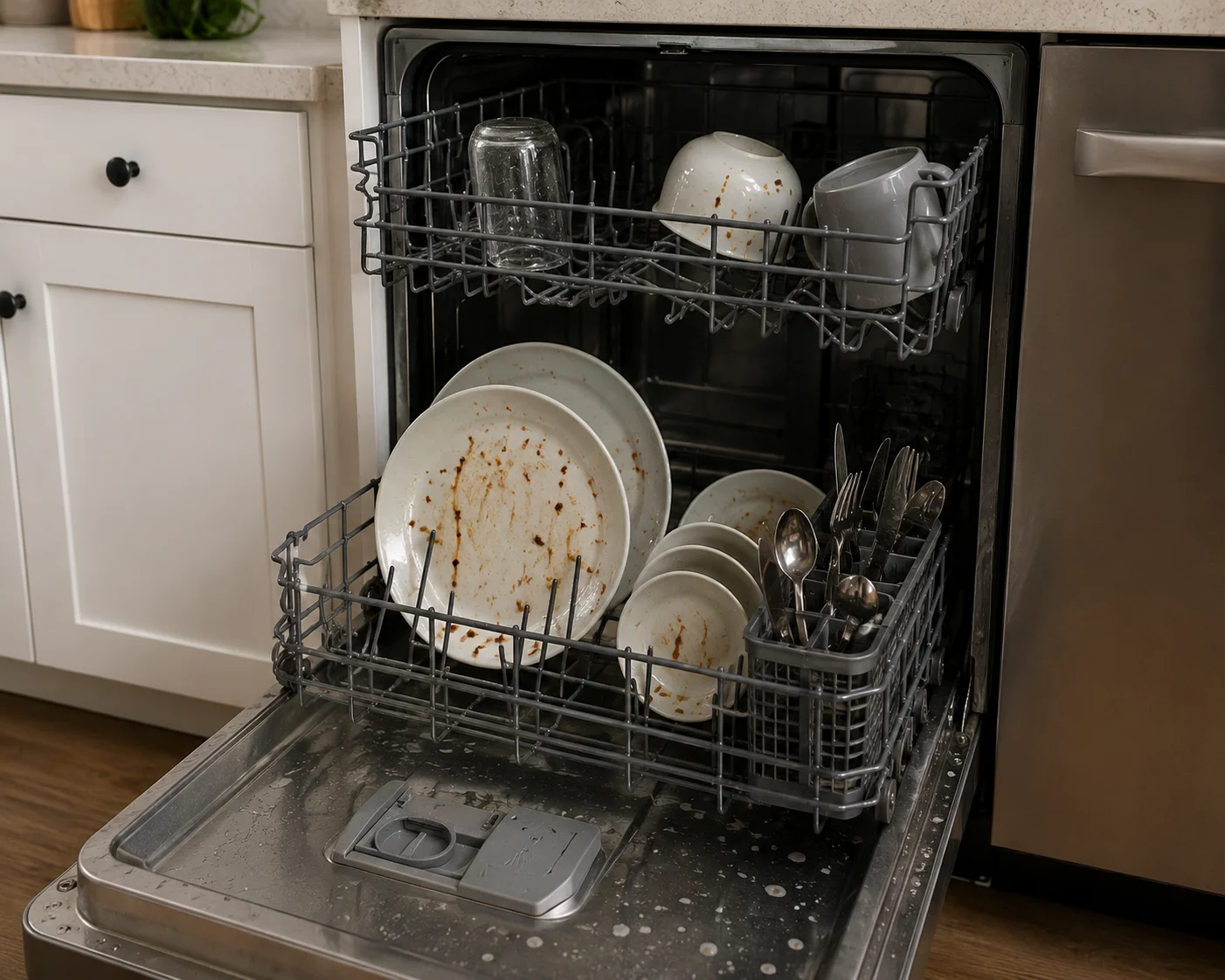
You load the dishwasher, run a full cycle and open the door expecting sparkling clean results — only to find your dishes coming out of the dishwasher dirty. Food bits still stuck on plates, cloudy glasses, or a white film on everything. Sound familiar?
You’re not alone. A dishwasher not cleaning is one of the most common appliance complaints homeowners face. The good news: in most cases, the culprit is something simple and fixable. Let’s walk through exactly why it happens and what you can do about it.
The Most Common Reasons Your Dishwasher Is Leaving Dishes Dirty
1. A Clogged or Dirty Filter
This is the number-one reason dishes are still dirty after a dishwasher cycle. Most modern dishwashers have a self-cleaning or manual filter at the bottom of the tub that catches food particles. When that filter gets clogged, water can’t circulate properly — and you end up with dirty water after doing the dishes recirculating right back onto your plates.
Check your owner’s manual to locate the filter. Remove it, rinse it under warm running water, and gently scrub with a soft brush. Do this once a month and you’ll notice an immediate improvement.
2. Hard Water Buildup and Mineral Deposits
If you’re dealing with a chalky white residue on dishes from the dishwasher, hard water is almost certainly the cause. Hard water is high in calcium and magnesium, and when water evaporates after a cycle, those minerals are left behind as a powdery or chalky film.
What causes chalky residue on dishes from dishwasher? The short answer: mineral-laden water reacting with the heat of your drying cycle. It’s not a sign of a broken machine — it’s a water chemistry issue.
How to remove residue on dishes from dishwasher: Run an empty cycle with a cup of white vinegar in a dishwasher-safe bowl on the bottom rack. For persistent buildup, use a dedicated dishwasher cleaner tablet monthly. A rinse aid dispenser filled consistently also prevents the mineral film from forming in the first place.
3. Water Temperature Is Too Low
Your dishwasher needs water between 120°F and 150°F to effectively dissolve detergent and cut through grease. If your water heater is set too low, or if the dishwasher isn’t getting enough time to pre-heat, you’ll constantly find dishes still dirty after the dishwasher runs.
Run your kitchen faucet hot for 30 seconds before starting your dishwasher. This purges the cold water sitting in the pipes and helps the machine start at the right temperature from the beginning.
4. The Spray Arms Are Blocked
Your dishwasher’s spray arms — the rotating pieces that jet water at your dishes — can get clogged with mineral deposits or food debris. When the holes are blocked, water pressure drops and dishes in certain spots never get properly rinsed.
Remove the spray arms (they usually unclip or unscrew easily), hold them under the faucet, and use a toothpick to clear each hole. This alone can dramatically fix a dishwasher leaving food residue on plates and bowls.
5. Overloading and Poor Loading Habits
One of the most overlooked reasons for a dishwasher not cleaning well is simply how you load it. Overcrowding blocks the spray arms and prevents water from reaching every surface. Bowls nested together, tall items blocking the spray path, or pots placed facing up (catching water rather than deflecting it) all result in dishes coming out dirty.
Load items with the soiled side facing the center and down toward the spray arms. Keep the top rack for glasses and lightweight plastics, and never block the detergent dispenser.
6. Detergent Problems
Using the wrong detergent, too little of it, or a product that’s gone stale (yes, detergent tabs absorb moisture and lose effectiveness over time) can all cause a dishwasher leaving dishes dirty. Store tabs in an airtight container, use one per cycle as directed, and make sure your dispenser door opens freely during the wash cycle.
7. The Dishwasher Isn’t Draining Fully
When you notice dirty water after doing the dishes still sitting in the bottom of the tub, the drain pump, drain hose, or garbage disposal connection may be partially blocked. Standing water redeposits soil on dishes during drying. Check the drain area for debris and make sure your garbage disposal is running before each dishwasher cycle (if they share a drain line).
Brand-Specific Notes
A Bosch dishwasher leaving dishes dirty is a surprisingly common complaint — not because Bosch makes inferior machines, but because Bosch units use a condensation drying system (no heating element). This means dishes need rinse aid to dry and shed water properly. Without it, water droplets dry in place and leave spots and residue that look like food soil. Fill the rinse aid reservoir regularly and the problem typically resolves itself.
Loading technique also matters more than many owners realize. Overloading the racks, nesting bowls together, or blocking the spray arms prevents water from reaching every surface properly. Plates should face inward toward the spray arms, larger items should stay out of the corners, and utensils should be mixed rather than tightly grouped. Even a perfectly functioning Bosch dishwasher can leave dishes dirty if water circulation is restricted by poor loading.
Why Does My Dishwasher Not Rinse Properly?
This comes down to three things working together: enough hot water pressure, a clear spray arm, and rinse aid in the dispenser. If any one of those is off, you’ll see residue, cloudiness, or film — especially on glassware. Check all three before assuming the machine needs a repair.
Why Are You Not Supposed to Rinse Dishes Before the Dishwasher?
Actually, you shouldn’t pre-rinse — and this surprises a lot of people. Modern dishwasher detergents are formulated with enzymes that need food soil to “activate” and clean effectively. If dishes are pre-rinsed spotless, the detergent has nothing to bind to and can actually leave a film on glassware. Scrape off large food pieces, but leave the rest for the machine. It’s designed for exactly that.
When DIY Fixes Aren’t Enough
If you’ve tried everything above and you’re still finding dishes coming out of the dishwasher dirty cycle after cycle, the issue may be internal — a failing pump, a broken spray arm mount, a faulty heating element, or a water inlet valve that isn’t opening fully. At that point, it’s time to call in a professional.
Searching for dishwasher appliance service in your area is a smart next step. A qualified technician can diagnose whether the repair is worth it or whether replacement makes more financial sense given the appliance’s age.
Preventive Maintenance to Keep Your Dishwasher Running Clean
- Clean the filter monthly
- Run a vinegar or dishwasher cleaner cycle every 4–6 weeks
- Keep the rinse aid dispenser filled at all times
- Check and wipe the door gasket weekly — mold buildup here affects the seal and water distribution
- Run your hot water faucet before starting a cycle
Small habits go a long way toward keeping a dishwasher not cleaning problem from ever coming back.If you’re in Florida’s Tampa Bay region, appliance service in Saint Pete is available from certified technicians who specialize in all major dishwasher brands — from Bosch and KitchenAid to Whirlpool and Maytag.
FAQs
Why are my dishes coming out of the dishwasher dirty even after a full cycle?
The most common causes are a clogged filter, blocked spray arms, low water temperature, or hard water mineral deposits. Start by cleaning the filter at the bottom of the tub — this alone fixes the problem in the majority of cases.
What causes chalky residue on dishes from the dishwasher?
Chalky or white residue is almost always caused by hard water. When the heated water evaporates, calcium and magnesium minerals are left behind on dishes and glassware. Using rinse aid and running a monthly vinegar cycle prevents this effectively.
Why is my dishwasher leaving food residue even though it runs a full cycle?
Blocked spray arm holes are a common cause — food particles or minerals clog the jets, reducing water pressure. Remove and clean the spray arms, and check that dishes aren’t blocking the arms from rotating during the wash cycle.
My dishes are still dirty after the dishwasher. Should I just hand wash?
Not yet. Before giving up on the machine, check the filter, water temperature, rinse aid level, and detergent freshness. Most “dishwasher not cleaning” issues have a simple fix that takes less than 15 minutes.
Why does my Bosch dishwasher leave dishes dirty?
Bosch units use condensation drying rather than a heating element, which means rinse aid is essential — not optional. Without it, water stays on dishes and leaves spots or residue that looks like soil. Refill the rinse aid dispenser and the problem usually disappears.
Should I call a technician or try to fix my dishwasher myself?
DIY maintenance (cleaning the filter, spray arms, and running a descaling cycle) handles the majority of issues. If the machine still isn’t cleaning after those steps, or if you notice unusual noises, standing water, or error codes, it’s time to contact a professional for dishwasher appliance service.