


 June 19, 2026
 Washing Machine Repair in St. Petersburg, FL: What Locals Need to Know
One minute everything is fine, the next you’ve got a drum full of wet clothes and a machine that won’t cooperate. If you’re in St. Petersburg, our appliance repair service in Saint Pete is available for same-week appointments – but before you call anyone, here’s what’s most likely going on and what you can do about it.
Why Is My Washing Machine Breaking Down?
Washing machines are built to handle thousands of cycles, but they do have predictable failure points – and most breakdowns aren’t random. They follow patterns based on age, usage habits, water quality, and which components wear fastest on specific models.
The majority of washer failures come down to a handful of culprits: the drain pump, the lid switch or door latch, the drive belt, the water inlet valve, or the control board. Understanding which one is failing tells you how urgent the repair is, whether it’s something you can address yourself, and roughly what it’s going to cost to fix.
Age plays a role too. A five-year-old machine that stops draining has a different repair profile than a twelve-year-old one with the same symptom. The older the machine, the more likely it is that one failing component is a sign of broader wear rather than an isolated fault.
The Most Common Washing Machine Problems in St. Pete Homes
These are the failures we see most regularly across Pinellas County — what causes them and what to look for.
Won’t drain or spin
The most common call we receive. Usually caused by a clogged drain pump filter, a worn drive belt, or a faulty lid switch on top-loaders. If the drum is full of water and nothing is happening, start with the filter – it’s accessible on most machines without any disassembly and takes about five minutes to check. For a full breakdown of what to do, our guide on what to do if your washing machine won’t drain or spin walks through each cause step by step.
Leaking Water
Door gaskets, inlet hoses, and pump seals are the usual suspects. A slow leak that’s been ignored often causes floor or cabinet damage that ends up costing more than the washer repair itself – worth addressing as soon as you notice it.
Stopping Mid-Cycle
This can point to a lid switch fault, a thermal overload in the motor, or a control board issue. The pattern matters: does it stop at the same point every cycle, or randomly? Consistent stopping at a specific point usually means a sensor or switch. Random stopping tends to suggest the motor or board.
Not Filling With Water
Clogged inlet screens and a failing water inlet valve are the two most common causes. Check that the supply valves behind the machine are fully open first — a partially closed valve produces the same symptom as a faulty inlet valve and takes thirty seconds to rule out.
Loud Noises During the Cycle
Banging during spin usually means an unbalanced load or worn drum bearings. Grinding points to something in the pump. Squealing is typically the drive belt or drum rollers wearing out. None of these mean the machine is done – they’re wear items that can be replaced.
Unpleasant Smells
A washer that smells musty or sour usually has mold or detergent buildup in the drum seal, the detergent drawer, or the filter. This is more common in front-loaders and in humid climates – which describes most of St. Pete for a good part of the year. If your machine has developed a smell, our guide on why your washing machine smells bad and how to fix it covers the causes and the cleaning process in detail.
How Pinellas County Hard Water Affects Your Washing Machine
This is something that doesn’t come up in most generic washer troubleshooting guides, but it matters a lot if you live in St. Pete or anywhere across Pinellas County.
The water here is hard. It carries a higher mineral content than average, and over time those minerals accumulate inside your washing machine in ways that accelerate wear and cause failures that wouldn’t otherwise happen for years.
Inlet valve screens, the small mesh filters where the water hoses connect to the machine — clog with mineral deposits faster than the manufacturer’s maintenance schedule assumes. When they restrict enough, the machine stops filling properly or triggers fill errors. Drum seals and door gaskets on front-loaders degrade faster in hard water environments, leading to leaks that catch homeowners off guard. The drum interior itself accumulates limescale buildup that affects wash performance and contributes to odors.
The pump filter, which should ideally be cleaned monthly, tends to need attention more frequently here than in softer water areas, particularly on front-loaders that see daily use.
The practical upshot: if your washing machine is having problems that seem early for its age, hard water wear is worth considering as a contributing factor. And if you want to reduce how often those problems occur, running a descaling cycle monthly and cleaning the filter regularly makes a real difference. Our guide on how to clean your washer filter step by step covers exactly how to do it without any tools.
What to Check If Washing Machine Doesn’t Work at All
Before you schedule a service call, run through these checks. They cover the most common causes and take fifteen minutes total.
Check The Basics First
Make sure the machine is plugged in, the water supply valves are fully open, and no settings have been changed accidentally. A partially closed supply valve and an accidental “delay start” setting produce symptoms that look like a broken machine.
Inspect The Drain Filter
On front-loaders and many top-loaders, there’s a small access panel at the bottom front of the machine. Open it, place a towel underneath, and check the filter for debris. A blocked filter causes drain failures, spin failures, and mid-cycle stops — and clearing it takes about five minutes.
Check The Hoses
Pull the machine forward and look at the inlet and drain hoses. Kinked, crushed, or improperly positioned hoses cause fill and drain problems that have nothing to do with the machine itself.
Listen and Observe
Run a short cycle and pay attention. Does the motor run? Do the drums fill? Where exactly does it stop? The more specific your description of what’s happening, the faster a technician can diagnose the problem, and the more accurate your estimate will be before anyone opens the machine up.
Check the door latch or lid switch
On front-loaders, make sure the door is closing and latching cleanly. On top-loaders, listen for the click of the lid switch. No click often means the switch has failed, which prevents the spin cycle from engaging.
How Pinellas County Conditions Wear Down Your Washer Faster
If your washing machine is having problems earlier than you’d expect, local conditions are often part of the reason – not just bad luck.
A few things work against washing machines in this area specifically.
Hard Water
Pinellas County water carries a high mineral content that builds up inside inlet valves, pump filters, and drum seals over time. This wear happens faster than most manufacturer maintenance guides assume – because those guides aren’t written for this area.
Humidity
Florida’s year-round humidity, especially in poorly ventilated laundry rooms, creates the perfect conditions for mold and mildew inside door gaskets and detergent drawers. It’s the main reason front-loader odor problems are so common here.
Salt Air
For homes closer to the water – St. Pete Beach, Clearwater, anywhere along the coast – salt air accelerates corrosion on hose fittings, external panels, and electrical connections. It’s a slow process, but it adds up.
When It’s Time to Call a Professional
If the checks above don’t point to an obvious fix, the problem is almost certainly internal — and that’s where DIY troubleshooting stops being cost-effective.
Washing machines have components that require a multimeter to test properly: the water inlet valve, the lid switch, the motor windings, and the control board. Getting these wrong means replacing a part that wasn’t the problem, while the actual fault continues. A technician with the right tools can test each component directly and give you a clear diagnosis rather than a process of elimination.
There’s also the safety dimension. Machines that involve both water and electrical components need to be handled carefully when panels are opened and wiring is accessed. It’s not that the repairs are impossibly complex — it’s that the cost of getting it wrong is higher than most people factor in.
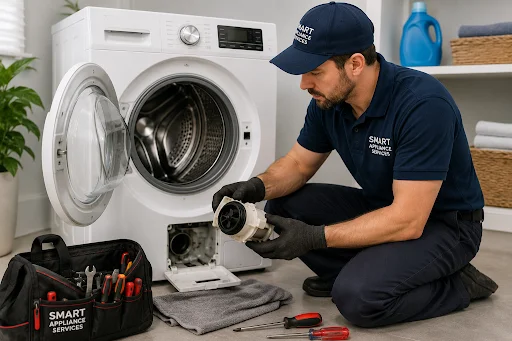
Our washer repair service covers all major brands and all of the failures listed above. Most repairs are diagnosed and completed in a single visit, with common parts carried on the truck to avoid delays.
FAQs
Can I Run My Washing Machine If It’s Leaking a Little?
Not recommended. Even a small leak can worsen quickly and cause floor or cabinet damage that costs far more than the repair itself. Stop using the machine and get it checked before the next load.
My Washing Machine Smells Fine But My Clothes Come Out With an Odor – Why?
Usually a detergent residue buildup inside the drum or a clogged dispenser drawer. Run an empty hot cycle with a washing machine cleaner, and wipe down the rubber seal and dispenser tray. If it continues, the drum may need a deeper clean.
How Often Should I Service My Washing Machine in St. Pete?
A basic maintenance check – filter cleaning, hose inspection, drum clean – every 3 to 6 months. Given Pinellas County’s hard water, more frequent filter checks are worth building into your routine.
Why Does My Washer Shake So Much During Spin?
Usually an unbalanced load or uneven feet. Try redistributing the clothes and checking that all four feet sit level on the floor. If it still shakes heavily with a balanced load, worn shock absorbers are likely the cause.
Is It Normal for a Washing Machine to Take Longer to Finish Cycles in Hot Weather?
Not exactly normal, but it happens. High ambient temperatures in Florida summers can cause the machine to run warmer internally, occasionally triggering thermal protection cutoffs that slow or pause cycles. If it’s happening regularly, the ventilation around the machine is worth checking.