


 June 22, 2026
 Why St. Petersburg’s Humidity Is Killing Your Refrigerator And What to Do About It
Florida doesn’t just feel humid – it is relentlessly, mechanically humid. St. Petersburg averages over 70% relative humidity for most of the year, with summers pushing into the high 80s and 90s. Your body adjusts. Your refrigerator doesn’t.
Refrigerators are designed to work against the environment around them. The more moisture in the air, the harder every component has to work – and in Tampa Bay, that extra strain shows up as higher energy bills, faster part wear, moisture problems, and eventually a breakdown that seems to come out of nowhere.
This guide covers exactly how humidity affects refrigerators, what symptoms to watch for, and what you can do to protect your fridge before it becomes an emergency.
Why Does My Fridge Have Condensation Inside?
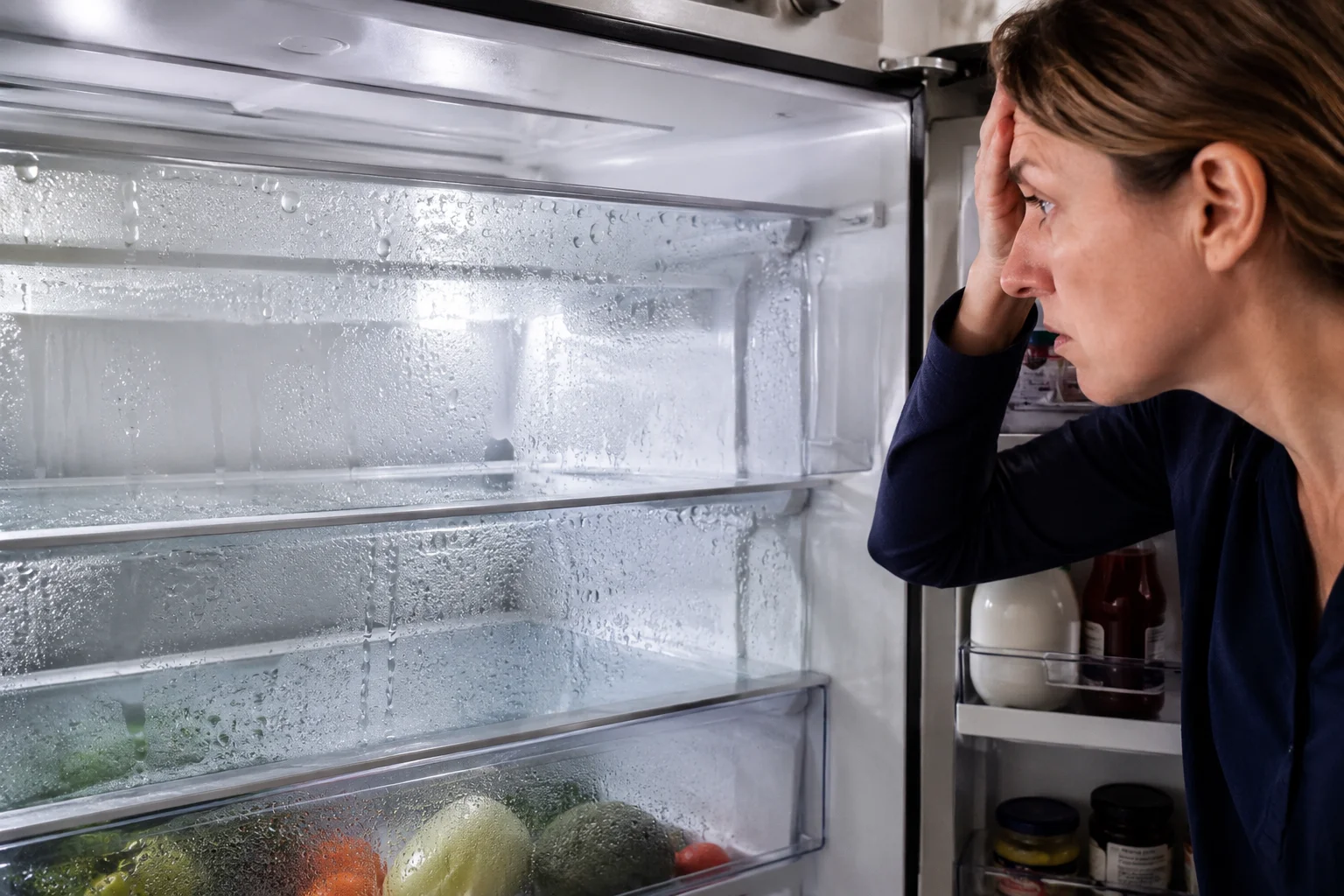
Finding moisture or water droplets inside the refrigerator – on the walls, on food packaging, or pooling on shelves – is a separate issue from exterior sweating, and it’s one that can lead to mold, food spoilage, and water damage inside the unit.
Refrigerator condensation problems in Florida usually come down to one of these causes:
Warm Air Getting In Through a Damaged Seal
If the door gasket isn’t sealing properly, warm humid air enters every time you open the door – and even when you don’t. That moisture condenses on the cold interior walls and shelves. Over time it builds up as visible droplets, frost in the freezer, or water pooling at the bottom of the fridge compartment.
The Defrost System Isn’t Keeping Up
Modern refrigerators have an automatic defrost cycle that melts frost buildup off the evaporator coils. If the defrost heater, defrost thermostat, or defrost timer fails, frost accumulates on the coils faster than it’s removed. Eventually that excess frost melts and drips into the interior as water – which looks like the fridge is leaking from the inside.
If you notice water pooling at the bottom of the fresh food compartment, or ice building up on the back wall of the freezer, the defrost system is worth investigating. You can read more about what happens when water starts appearing inside or beneath the unit in our guide on refrigerator leaking water.
A Clogged Defrost Drain
The defrost drain carries meltwater from the evaporator coils down to a drain pan under the refrigerator where it evaporates. In Florida, this drain can get blocked by debris or ice, causing water to back up and spill into the interior instead of draining properly. A blocked defrost drain is one of the more common refrigerator moisture problems we see in Pinellas County – and it’s a relatively easy fix once the blockage is cleared.
Why Is My Refrigerator Running Constantly in Summer?
A refrigerator that never seems to turn off is working harder than it should. In a Florida summer, some increase in run time is normal – but if the compressor is running almost continuously, something is making the fridge work against itself.
Dirty Condenser Coils
This is the most common cause, and it’s entirely preventable. The condenser coils release the heat your refrigerator pulls from its interior into the surrounding room. When they’re coated in dust, pet hair, and debris, that heat transfer is blocked – the fridge can’t dump heat efficiently and the compressor keeps running trying to compensate.
In a typical dry climate, coil cleaning once a year is enough. In St. Petersburg, where dust, pet dander, and humid air combine to create a sticky coating on coils, every 3-4 months is more realistic. It’s a straightforward maintenance task – our full walkthrough on cleaning your refrigerator coils covers exactly how to do it.
The Compressor Is Overworking Due to Humidity
When ambient humidity is high, the refrigerator compressor has to work harder and longer to maintain internal temperature. Over time, this sustained load causes the compressor to overheat, run inefficiently, or fail prematurely. A compressor overworking due to humidity will often make a louder-than-normal hum and the area around the compressor (at the back or bottom of the unit) will feel unusually hot to the touch.
A refrigerator compressor that’s genuinely failing is one of the more expensive repairs — but caught early, the underlying cause (poor ventilation, dirty coils, a failing start relay) can often be addressed before the compressor itself gives out.
Poor Kitchen Ventilation
Refrigerators need airflow around them to dissipate heat. If yours is crammed into a tight cabinet enclosure with no clearance on the sides or top, or positioned next to the oven or in direct sunlight through a window, it will run constantly regardless of the season. In a Florida summer kitchen, this problem compounds quickly.
The manufacturer’s recommended clearance is typically 1 inch on the sides and 1–2 inches at the top and back. If your fridge doesn’t have that, it’s working harder than it needs to every single day.
My Refrigerator Is Not Cooling Properly – Is Humidity the Cause?
Humidity can contribute to cooling problems, but it’s rarely the direct cause on its own. When a refrigerator is not cooling in humid weather, something mechanical is usually involved – humidity just makes it worse or accelerates the failure.
The most common culprits behind poor cooling in Tampa Bay refrigerators:
• Dirty condenser coils (see above) – the most common and most preventable cause.
• A failing evaporator fan that isn’t circulating cold air through the compartment properly.
• A refrigerant leak – if the fridge is running constantly but the interior stays warm, refrigerant loss is a possibility.
• A failing door seal allows warm air to replace cold continuously.
If your refrigerator is running but the inside isn’t cold, our guide on why is my refrigerator running but not cooling covers the most common causes and how each one presents. And if things have progressed to where the fridge isn’t getting cold at all, see our breakdown on refrigerator not getting cold for a step-by-step diagnosis.
Mold and Mildew Inside the Refrigerator – A Florida-Specific Problem
Mold inside a refrigerator isn’t just a hygiene issue – it’s a sign that moisture is getting in and staying there. In St. Pete’s climate, a refrigerator with a failing door seal or a blocked defrost drain can develop mold growth surprisingly quickly, especially in the door gasket folds, on the interior walls, and in the vegetable crisper drawers.
If you find mold inside your fridge:
• Clean the interior with a solution of one tablespoon of baking soda per quart of warm water. Avoid bleach – it can leave odors that transfer to food.
• Remove and soak the crisper drawers separately.
• Clean the door gasket thoroughly, including inside the folds where mold hides.
• Check whether the gasket is sealing properly after cleaning. If mold returns within a few weeks, the seal needs to be replaced – cleaning alone won’t fix an underlying gap.
Refrigerator mold and mildew prevention in Florida comes down to two things: keeping the door seal in good condition and making sure the defrost system is working so moisture doesn’t accumulate inside.
What Temperature Should My Refrigerator Be Set to in Florida?
The FDA recommends keeping your refrigerator at or below 40°F (4°C) and your freezer at 0°F (-18°C). In Florida, staying at the lower end of that range – around 37°F for the fridge – gives you a little buffer against temperature fluctuations caused by frequent door openings in a humid kitchen.
A refrigerator thermometer is worth having. The built-in temperature displays on most fridges measure the air temperature at the sensor location, which can be several degrees different from the actual temperature at the shelves where your food sits. A standalone thermometer placed mid-shelf gives you a more accurate read.
If your fridge struggles to hold 40°F even when set lower, that’s a sign something needs attention – not just a settings issue.
How to Protect Your Refrigerator from Humidity in St. Pete
Most humidity-related refrigerator damage is preventable. Here’s what actually makes a difference:
• Clean the condenser coils every 3-4 months. In Florida this isn’t optional – it’s the single most impactful maintenance task you can do. Pull the fridge out, vacuum the coils at the back or underneath, and you’ll immediately reduce the load on the compressor.
• Check the door gaskets twice a year. Run your hand around the seal with the door closed – you shouldn’t feel cold air escaping anywhere. Do the paper test described above if you’re unsure. Replace the gasket if it’s stiff, cracked, or not gripping.
• Don’t overfill the refrigerator. A packed fridge blocks internal airflow, creates warm spots, and forces the compressor to work harder. Leave space between items for air to circulate.
• Let hot food cool before refrigerating it. Putting a hot pot directly in the fridge dumps heat and moisture into the interior all at once – in a humid Florida kitchen, that’s a double hit.
• Make sure there’s clearance around the unit. At least an inch on the sides, more at the back and top.
• Keep the kitchen ventilated. A well-ventilated kitchen with lower ambient humidity and temperature makes a measurable difference in how hard your refrigerator has to work.
• Check the drain pan periodically. The pan under the fridge collects condensate. In Florida’s humidity it can fill faster than it evaporates, overflow, and cause water damage under the unit. Slide it out, empty it, and wipe it clean.
Tampa Bay’s Humidity Takes a Toll – Here’s What We Fix Most
As a local appliance service in Saint Petersburg serving Pinellas, Pasco, and Hillsborough counties, we see the same humidity-driven refrigerator failures repeat themselves every summer. The pattern is consistent: door seals go first, then coils get neglected, then the compressor starts working overtime, and eventually something gives.
The good news is that most of what we repair could have been caught earlier. A failing door gasket is a $100-150 repair. Ignoring it until the compressor overworks itself into failure is a $400-600 repair – or a replacement.
Here’s what a typical service call looks like:
• Same-day or next-day appointments across St. Petersburg, Clearwater, Largo, and Tampa.
• $89 diagnostic fee – waived when you approve the repair.
• 1-year parts warranty and 30-day labor warranty on every job.
• 4.8-star Google rating from St. Pete homeowners who didn’t want to be sold a new fridge when theirs was fixable.
If your refrigerator is sweating, running constantly, not cooling, or showing any of the signs covered in this guide, don’t wait until it fails completely. Book our refrigerator repair services online or call (727) 275-7555.
FAQs
Can Florida humidity permanently damage a refrigerator?
Yes, it accelerates wear on door gaskets, corrodes condenser coils, and overworks the compressor over time. Most of the damage is preventable with regular maintenance.
My fridge is leaking water on the floor. What causes it?
Humidity contributes, but the direct cause is usually a clogged defrost drain or an overflowing drain pan. Check the pan under the unit first, and call a technician if the leak continues.
How do I know if my refrigerator’s door seal needs replacing?
Close the door on a piece of paper and pull it out. If it slides out easily, the seal isn’t gripping. In Florida, gaskets typically need replacing every 5-8 years.
Why does my freezer have ice buildup on the back wall?
Almost always a defrost system failure. Left untreated, the ice blocks the evaporator fan and the freezer stops cooling entirely.
How do I stop my fridge from sweating in summer?
Start with the door seal – most exterior sweating traces back to a failing gasket. If the seal is fine, the anti-sweat heater in that section has likely failed.
Is it worth repairing a humidity-damaged refrigerator?
Usually yes, if the fridge is under 10 years old. Gaskets, defrost components, and fan repairs are moderate-cost fixes. The exception is a failed compressor on an older unit.